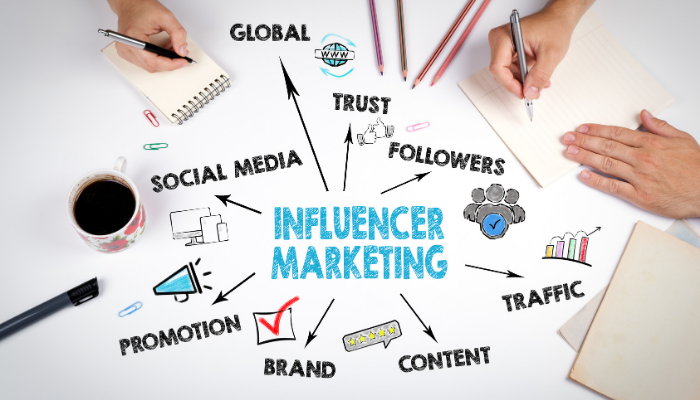
Influencer marketing has been booming since the mid-2000s. According to Influencer Marketing Hub, this sector is expected to reach approximately $24 billion by 2024. This growth is driven by emerging trends, including breakthrough technologies, new social media platforms, and evolving consumer attitudes toward influencer-sponsored content. Communications professionals, therefore, must stay abreast of evolving influencer marketing trends to keep their brands competitive in their respective industries and sectors.
Maximizing Influencer Impact in Niche or Precise Markets
Conducting B2B influencer marketing presents a unique set of challenges that differs significantly from the strategies employed by consumer brands. Unlike consumer brands, which can easily partner with one of the millions of lifestyle influencers available, B2B influencer marketing requires a more nuanced approach. This involves identifying and collaborating with industry-specific thought leaders who possess deep expertise and credibility within their niches. These influencers are not only fewer in number but also demand a strategic alignment with the brand’s values and objectives. Thus, the process of selecting the right B2B influencers is far more complex and critical to ensuring a successful partnership that resonates with a professional audience.
To navigate these complexities and achieve impactful results, many businesses turn to specialized agencies like Eberly & Collard Public Relations. Our expertise lies in conceptualizing and managing tailored Social Media Influencer Programs that bridge the gap between brands and industry experts. By leveraging our deep understanding of B2B dynamics, we ensure that the influencer partnerships we curate are both strategic and effective. In the following case studies, we’ll showcase how our targeted approach has successfully addressed the unique challenges of B2B influencer marketing for our clients.

Case Study: Coverings 2024 Influencer Program
Coverings, the largest tile and stone tradeshow in North America, sought out ECPR to implement annual influencer marketing programs to generate and enhance event visibility, drive attendee registrations and increase engagement across Coverings’ digital platforms.

Influencer Marketing is an Essential Strategy to Drive Event Attendance.
For Coverings 2024, our Influencer Marketing team employed a robust, targeted influencer marketing strategy focusing on securing partnerships with a diverse mix of content creators, aligning with the show’s key audience segments: interior designers, architects, builders, remodelers, contractors and more. Upon assembling a carefully researched list of hundreds of suitable candidates, ECPR team members strategized their outreach plans by sorting influencers into tiers based on numerous variables, such as follower count, engagement analyses and content relevance. Once highly relevant influencer partnerships were secured and negotiated, our program initiatives transitioned to content collaborations and onsite planning, some of which included:
- Engaging influencers to create and share content related to the event themes and highlights.
- Conceptualizing social media influencer agreements that included expert content goals and benefits for Coverings, while still permitting the influencers to utilize their own voices, tones and styles.
- Coordinating an Influencer Tour to provide firsthand experiences of the event’s offerings and a platform for them to create content onsite to share with their respective audiences.
- Utilizing influencers to promote a wide range of Coverings education, activations and other programming aimed at driving engagement and registration for the event.

Talented Influencer Amber Guyton Attending Our Coverings 2024 Influencers Tour.
The Coverings 2024 Influencers we secured and with whom we closely collaborated including the prominent interior designer Brittany Palazzo, architect Jeffrey Bruce Baker and installer Schannon Yodice, among many other talented content creators and social media personalities, were tasked with crafting wide-ranging content, including Instagram and Facebook posts, stories, TikToks and LinkedIn updates, all meticulously designed to highlight the distinctive features of Coverings 2024 and to amplify informational reach across every applicable audience segment.
The Results:
- Enhanced research methods from the ECPR influencer marketing team generated a 50% increase in Influencer Tour attendance compared to the previous year.
- The influencer campaign generated a total of 71,031,670 max potential impressions, an increase of 44.1% compared to the previous year
- The ECPR team significantly increased video content for Coverings 2024 by producing seven times more videos and reels from influencers. This strategic enhancement led to higher engagement levels with influencer content and subsequently drove an increase in event registrations.
- Coverings had significant growth in social media followers, with an addition of 4,352 new accounts across platforms.
- The strategy not only amplified the event’s reach but also significantly increased social media engagement and interactions across a broad range of audience segments.
Key Highlights:
- Influencers like Schannon Yodice (contractor) and Brittany Palazzo (interior designer) were particularly effective, garnering millions of impressions each, which indicated an especially strong resonance with their respective audience segments.
- Niche influencers like Jeffrey Bruce Baker successfully engaged with architects in the Atlanta area, regionally and nationally, significantly boosting the architectural industry attendance at Coverings 2024.
- The content shared by our influencers helped portray the event’s critical messages and highlights, directly contributing to an increased awareness and interest in Coverings 2024 across varying audience segments.
The success of the Coverings 2024 Influencer Program underscores the power of targeted influencer collaborations in amplifying event outreach, engagement and attendance. By strategically selecting and partnering with influencers who aligned with the event’s core audiences, Coverings was able to significantly enhance its digital footprint and set a robust precedent for future events.

Macro, Micro and Nano Matter
While influencers like Brittany and Schannon significantly boosted reach and engagement, micro and nano influencers like Jeffrey offered a unique advantage by connecting with a more targeted audience through his tight relationships with followers. Despite having a slightly smaller reach compared to macro influencers, Jeffrey and other micro or nano influencers often excel in niche or specialized markets and achieve higher engagement rates.
According to Aspire’s sixth annual benchmark report, “The State of Influencer Marketing 2024,” micro and nano-influencers are highlighted as key trends to watch this year. The report reveals that nano-influencers consistently achieve the highest engagement rates across all platforms, averaging an impressive 4.4%. Their focus on close-knit communities enables brands to engage with highly loyal and enthusiastic audiences.
According to Influencer Marketing Hub, there’s a strong preference for partnering with smaller influencers, with nano-influencers (44%) and micro-influencers (26%) favored over more expensive macro-influencers (17%) and celebrities (13%). The effectiveness of nano and micro-influencers in achieving better influencer marketing ROI largely depends on the campaign’s objectives and target audience. The Coverings 2024 program illustrates that a strategic blend of influencer tiers can maximize both reach and engagement. Macro influencers are ideal for broad brand awareness, while nano and micro influencers offer superior ROI for highly targeted, niche campaigns due to their strong connections and high engagement rates with specific audiences.
Many companies are using AI tools like Upfluence, Traackr and Heepsy to find macro, micro and nano influencers. According to Influencer Marketing Hub, 63% of marketers plan to integrate AI into their influencer campaigns.

Our Eberly & Collard Public Relations influencer marketing team guides the strategic, creative and contractual processes for our clients’ social media influencer content and campaigns.
AI is transforming campaign management by leveraging data analysis to precisely match influencers with a brand’s target audience, enhancing both precision and efficiency. However, despite its advanced capabilities, AI can occasionally struggle to effectively identify niche influencers capable of projecting genuine authenticity through online promotions on behalf of a brand.
Navigating the Surge of AI in Influencer Marketing
AI influencer marketing tools have streamlined and enhanced various aspects of campaign management. AI algorithms and influencer tools have now become very common in analyzing data to find individuals whose audience demographics, interests and engagement levels align with a brand’s target market. According to Influencer Marketing Hub, “50% of those who have worked with AI influencers described their experience as ‘very positive’.”
Despite its transformative impact on influencer marketing, AI-driven research can sometimes overlook the genuine connections and insights that human influencers provide. AI relies on algorithms and data, which can result in content that feels formulaic and impersonal. This detachment from authentic human experiences and emotions can undermine the relatable and heartfelt connections that build trust and engagement with audiences. As AI can impact the influence of social media marketing on customer loyalty, the role of influencer marketing agencies becomes essential in crafting effective influencer partnerships.
From planning the influencer marketing strategy and conducting influencer outreach to negotiating and finalizing contracts and collaborating on impactful content creation, our team helps create genuine influencer partnerships for our clients. We conduct thorough research across diverse social media platforms to identify influencers who align seamlessly with our clients’ brands. This careful selection process ensures that the influencers we partner with will resonate deeply with their target audiences, driving increased engagement for our clients. By prioritizing influencers who genuinely use and believe in the brands, products or services they promote, we enhance the authenticity of each partnership, thereby building stronger trust between the brand and its audience.
Boosting Authenticity and Transparency in Influencer Partnerships
In the current digital climate, authenticity has become a cornerstone of successful influencer partnerships. Influencers who genuinely believe in and use a product or service bring sincerity to their endorsements. According to Sprinklr, “89% of customers value authentic content, making authenticity a crucial component of influencer marketing.” This genuine connection often translates into trust, encouraging followers to engage with and purchase from the brand. Authenticity not only bolsters the credibility of the influencer’s recommendations but also strengthens the bond between the brand and its audience, fostering deeper and more meaningful connections.

When influencers seamlessly integrate a brand into their content with genuine intent, it resonates more profoundly with their followers. This authenticity builds trust, which is invaluable for increasing brand loyalty and driving higher conversion rates.
Case Study: Chiarabella 2024 Influencer Program
The goal of the Chiarabella influencer program is to elevate brand awareness across the United States by enhancing the company’s social media presence through strategic collaborations and partnerships. Chiarabella, which is one of the most trusted brands of kitchen, bath, wardrobe, and storage solution products, has a strategic targeted influencer marketing strategy that focuses on key figures in the interior design, distribution, construction, hospitality, and architectural industries.
We chose influencers for Chiarabella based on their follower count, engagement rates and alignment with Chiarabella’s brand values and sales objectives. The approach includes engaging influencers to create and share Chiarabella content about the brand’s flagship showroom and diverse range of kitchen and bath products, custom cabinetry, smart toilets, tubs, faucets and fixtures, wellness products, and others. Our Atlanta team also coordinates tour events at the showroom for our influencers to create content about the brand nationwide.
The ECPR team researched, vetted and acquired influencers Erika Ward, Jeffrey Bruce Baker and Ronald Jones who create multifaceted content that ranges from Instagram posts and stories to Pinterest posts and Facebook updates, all designed to highlight the products and attributes of Chiarabella.
The Results:
- The Chiarabella Gallery expanded its reach within the interior design, distribution, construction, hospitality, and architectural sectors through collaborative posts with influencers. This strategy not only enhanced B2B and B2C interactions but also significantly increased engagement with Chiarabella’s target audience.
- Growth in social media followers boomed, spanning the design and hospitality trade sectors with which the brand aligns.
- Connections with consumers of affluence generated flagship showroom foot traffic, design appointments, and brand awareness that has converted to brand equity and custom kitchens, baths and more.

ECPR’s select team members, alongside influencers Erika Ward and Ronald Jones, planning creative content at the Chiarabella showroom in Atlanta.
Key Highlights:
- Just one of Ron’s Instagram reels reached over 27,500 accounts with exponential visibility and interactions within a matter of hours.
- Chiarabella’s account engaged with 22,000 new accounts in July 2024, when one influencer’s reel went live, giving rise to a bevy of new followers, likes, reshares, and comments.
- Our influencer program showcased numerous custom cabinetry solutions and kitchen and bath product options to tens of thousands of interior designers, architects and builders in days, kick-off weeks and months of growing content and engagements.
The results significantly boosted Chiarabella’s awareness and engagement. Influencer collaborations increased visibility, while in-person influencer events at the showroom fostered direct interaction with Chiarabella’s social media presence.
The ECPR team successfully forged valuable partnerships with influencers who authentically showcased their enthusiasm for Chiarabella’s products and design. Ron’s genuine passion for Chiarabella’s intelligent toilets led to a deeper collaboration than initially planned. His ability to pivot his content to emphasize what he truly values about the brand provided a credible third-party endorsement.
On the other hand, Erika’s design philosophy—characterized by a blend of timeless and modern elements—mirrors the essence of Chiarabella’s offerings. Her alignment with Chiarabella’s modern yet classic elegance resulted in content that she sincerely endorses, reflecting her genuine appreciation for the brand. In turn, Jeffrey brought Chiarabella’s brand offer to light for leading architects and consumers in the Southeast, throughout the U.S. and Internationally with his diverse fans and followers.
The openness from influencer relations helps build trust with the audience, who appreciates authenticity and honesty. Additionally, featuring behind-the-scenes content or interviews with influencers about their experiences with brands can further demonstrate transparency and foster solid and real connections with followers. By prioritizing authenticity and transparency, brands can build stronger, more credible relationships with their audiences, ultimately driving more effective and meaningful engagement.

The dynamic nature of the influencer marketing landscape in 2024 and beyond necessitates the expertise of a well-versed influencer marketing agency. Agencies help brands navigate the complexities of influencer selection, campaign management and performance analysis. By leveraging industry insights and advanced tools, they ensure that brands can effectively engage with their audiences and achieve their marketing objectives.
Do you need an agency to help with influencer marketing for your business? Reach out to Eberly & Collard Public Relations to receive in-depth, expert advice from our full-service PR firm and influencer marketing agency. We are equipped to build B2B and/or B2C influence for your business, personnel, products, services and brands.