Eberly & Collard
Get Started
  • Home
  • About
    • About ECPR
    • Leadership
    • FAQ
    • Process
    • Careers
  • Expertise
    • Expertise
    • Integrated Marketing
    • Branding
    • Digital Marketing
    • Public Relations
    • Media Relations
    • Advertising
  • Industries
    • Industries & Sectors
    • Architecture
    • B2B Professional Services
    • Building Products
    • Construction
    • Consumer Products & Services
    • Engineering
    • Horticulture & Landscape
    • Hospitality & Travel
    • Interior Design
    • Kitchen & Bath
    • Real Estate Development
  • Portfolio
  • Blog
  • Contact
Home » Archives for Uncategorized

Health and Beauty: The Redesign of the Spaulding Rehabilitation Hospital

January 16, 2014 By Don Eberly 1 Comment

Hospital design involves much more than aesthetic functions. The architectural characteristics, technological amenities and quality of the materials used can have a profound effect on overall healthcare, including efficiency of hospital workers, patient care and the comfort of families during their times of need. 
Spaulding Rehabilitation Hospital
Photo credit: Perkins+Will
The new Spaulding Rehabilitation Hospital in Boston opened in 2013, designed by Boston-based architecture firm Perkins+Will. Acting as the Harvard School of Medicine Teaching Hospital and having been ranked 6th among rehabilitation hospitals for 2012 / 2013 in the United States by the US News & World Report, this facility serves a great purpose in the community. Designed to be a center of healing for both rehab patients and the surrounding public, this modern and sustainable building features many remarkable characteristics, including 378,367 square feet, 132 private patient rooms, eight floors, curved architectural elements and an exterior modeled after ship-making material.

Photo credit: Perkins+Will

The former Spaulding Rehabilitation Hospital building layout included steps in the main entrance, compelling people in wheelchairs to use a ramp located at a side entrance. However, a main goal for the new facility was to be inclusive for all, no matter the physical capabilities. Now, six-foot wide corridors and floor-to-ceiling windows provide accessibility and openness. A management system also opens and closes windows depending on weather patterns, ensuring the space is well-ventilated as well as utilizing the benefits of natural light.

Photo credit: Architect Magazine

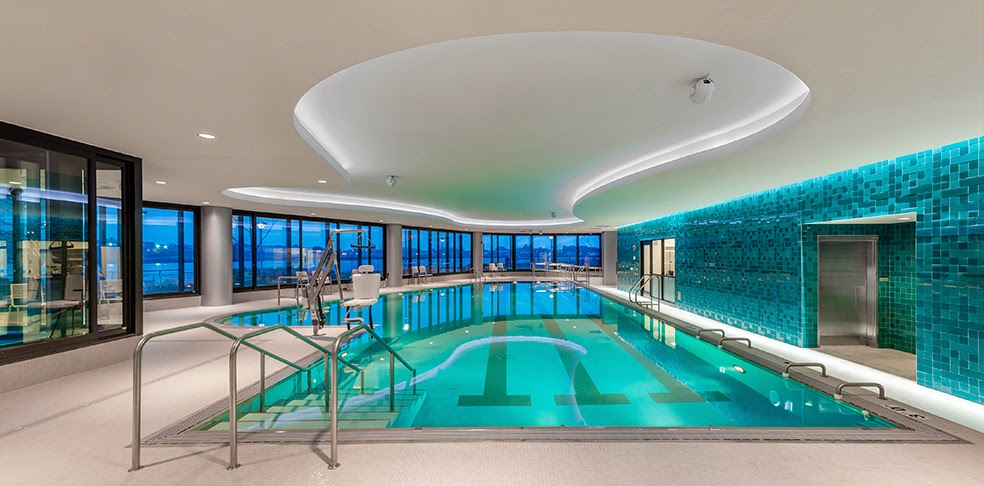
Uniquely situated, particularly for a hospital, on the waterfront of the Boston Harbor in the city’s historic Charleston Navy Yard, the natural amenities surrounding the hospital were employed to further aid rehabilitation patients. Architects integrated additional therapeutic equipment to allow patients the opportunity to perform physical therapy in an array of landscaped surfaces, combined with the Boston Harborwalk, which consists of various trails and avenues to the waterfront. Also near the water is a state-of-the-art therapy pool, which boasts panoramic views of the harbor and Boston skyline.

Photo credit: Perkins+Will

Owner: Spaulding Rehabilitation Hospital, Partners HealthCare
Architect and Interior Designer: Perkins+Will
General Contractor/Construction Manager: Walsh Brothers
Environmental Consulting: Haley & Aldrich Inc.
MEP Engineering: Thompson Consultants Inc. (lead engineers) and Buro Happold
Structural Engineering: McNamara/Salvia Inc.
Lighting Design: AKF
Medical Equipment Planning: Source Atlantic
Landscaping: Copley Wolff Design Group and Hoerr Schaudt Landscape Architects (roof terraces) 

Filed Under: Uncategorized

Outdoor Living Space Growth and Trends for 2014

January 9, 2014 By Don Eberly Leave a Comment

Outdoor rooms are in! – The improvement of the national economy and housing market has had a great effect on the outdoor furniture, landscape and hardscape industries, as homeowners are gaining confidence and investing in their backyard spaces. In a recent issue, Casual Living, a leader of the leisure market, declared that the outdoor room trend that began nearly five years ago is seeing steady growth as the economy recovers.

Casual Living December 2013

Landscape designers and architects, stay ahead of the game and implement outdoor living space trends, sourced from Casual Living, into your next project.

3 Trends for Outdoor Living Spaces

1. Add fire pits for a touch of luxury. Due to the surge of consumer confidence, outdoor living enhancements and luxuries like fire pits and fireplaces are becoming more prominent. The addition of fire pits is attractive, in that they call for accompanying cozy seating furniture and arrangements. Try wood-burning fire pits for a more authentic feel, or convertible fire pits. Some convertible fire pits can be transformed from a pond to a planter, making them perfect for year-round use.

Casual Living December 2013

2. Introduce better outdoor lighting. The lighting industry is also catching on to the improvement of the outdoor landscape and hardscape industries with lighting systems appearing more in pavers and walkways. Use well-placed, long-lasting LED lighting outdoors to softly and subtly illuminate your design.

Photo credit – McKay Lighting

3. Expand with outdoor rooms. Consumers are taking their typical indoor home activities outdoors. Design their spaces to meet these needs. Provide adequate seating and gathering room, countertop space for cooking and even technology amenities like televisions. According to Joe Fields, director of contractor services and sales for EP Henry, a New Jersey-based hardscape company, homeowners are no longer building on a second story or room; outdoor spaces are now being built as an alternative. “This is their addition to their home,” says Fields. “It’s becoming an extension of the family room.”

Casual Living December 2013

For more information about outdoor rooms, or to read the full Casual Living article, click the link. http://bit.ly/1lG6ZsN

Filed Under: Uncategorized

2014 New Year’s Resolutions: It’s Not Personal…It’s Business!

January 3, 2014 By Don Eberly Leave a Comment

The New Year is now here and many of us are embarking on the journey to achieve personal resolutions that will overall enhance our quality of life. Much like our desires to accomplish our own individual goals, large and small businesses also jump on the resolution train to help improve operations and increase productivity.

In the ever-changing world of public relations, it is important to stay up-to-date on the latest innovations and trends of our industry. PR News is one, among many, go-to sources for public relations professionals to learn about industry happenings, strategies and tactics. To lay the foundation for a productive and successful 2014, Susan Howe, president of global consumer marketing at Weber Shandwick, shares her expert tips in an article titled “PR Insider: Planning, Engaging and Improving for 2014,” which recently published on PR News’ website. Below, we have taken her helpful insights and applied them to the industries in which our firm represents.

Measure, adjust and be honest with yourself about last year

Before planning for the future, we must evaluate the past. By analyzing the data outcomes of programs or promotions or the value of certain services or products, a company can determine what was successful, what needs to change and what can be removed. The analytics process should not be about simply looking back, but to gain insights into what consumers care about and what products and services will engage them moving forward. Two good examples of thorough data analysis are Furniture Today’s 2013 Consumer Report and the 2014 Construction Market Trends, details for both can be found in previous blog posts our team completed. The analysis of this data allows companies to appropriately plan for the future.

Click the links above to view the blogs.

Get closer to the consumer

Howe says, “Engaging people means knowing their wants, likes, needs, hopes, and fears…using those insights to incite action.” To increase consumer engagement, a business must be in-tune with these desires. Once accurate data is acquired, marketing and sales teams will be able to create concepts that fuel a change in thinking and drive toward action.

Customer surveys with good incentives are excellent tools for gathering data directly from the source. For example, home furnishings and garden center retailers could provide brief questions for in-store customers or a short online survey, and in exchange for their feedback, they would be eligible to receive a discount on their next purchase. As a result, over time, the customer data collected would be invaluable information for developing new practices, programs and products.

Click the photo to view Today’s Garden Center’s
2014 Revolutionary 100 Garden Center Survey
Look around the corner for trends

As we stated earlier, it is critical to stay ahead of what’s current and look for what is next. Regularly researching industry news can help a company create a plan that will be successful across various platforms.

Blogs and newsletters from industry associations or publications are essential resources for staying informed. A prime example is our latest ECPR blog post featuring the Pantone® Color Report Spring 2014. Interior designers creating spaces and textile manufacturers incorporating these colors in spring collections are setting their companies and clients up for market sales success, in style! Even greater success could come in taking risks in design and daring to be a tad bit more avante garde in fashion.

Consider the plan in beta

Your 2014 marketing plan is new and in development stages, so it is important to make it adaptable to changes or opportunities, in real time. “What it means is being present for the always-on consumer and sharing a brand story in a relevant way in a relevant moment.” The most successful plans have strategic elements that allow a company to seize advantage of an unforeseen opportunity. A combination of research and a system for quick, active product production and distribution will only increase a company’s ability to react in these moments.

Click the photo to view the full PR News article.

Live collaboratively

A company’s entire team will determine its success in 2014, which includes staff, client and agency partners. Strong leadership and clearly defined roles will help overall strength and competency, while supporting the best ideas will boost morale. At ECPR, we hold weekly company meetings where everyone, from our CEO to our interns, shares their creative ideas on various tasks and client projects. You never know where the next great, innovative idea may come from, so we are always open-minded and attentive to team creativity.

New year, new beginnings. Take these tips, apply them and jumpstart your business’ growth in 2014! Happy New Year!

Filed Under: Uncategorized

Pantone’s Spring 2014 Color Report is Here!

December 20, 2013 By Don Eberly Leave a Comment

Pantone has been the “color authority” since it was founded in 1963 by Lawrence Herbert. Herbert created the Pantone® Color Matching System book of standardized color to resolve the problem of accurate color production in graphic arts. Since then, Pantone has expanded to other color-intensive industries such as textiles, architecture, contract interior design, and paint manufacturing. 


Every year, the Pantone team, with the input of select industry influencers and designers, creates the spring and fall color reports. These hues become the foundation for the next Fashion Week or furniture market. Oftentimes, many designers and color-enthusiasts will incorporate the new seasons’ color trends in small ways, like home décor accessories, and on grand scales such as a blast of color to the exterior wall of an architecture firm’s latest design project. Below, we have listed Pantone’s 2014 Spring Color Report and provided a few examples, just to get your creative juices flowing. Enjoy!


Pantone® Fashion Color Report Spring 2014

Cayenne: Spicy, yet not intimidating, Cayenne will add a blast of courage to an otherwise neutrally comfortable space. 


Photo Credit – Better Homes & Gardens

Celosia Orange: Named after a stunningly unique flower, Celosia Orange’s vibrant and energetic color radiates warmth throughout this contemporary children’s bedroom.


Photo Credit – Haus Line

Dazzling Blue: While endearing and bold, Dazzling Blue can be used in small accessories or large furniture pieces. If you truly love this color, splash it on the walls, too! 


Photo Credit – Rue Magazine

Freesia: Also influenced by a flower, Freesia is sweet and optimistic; this color is great for the innovative workplace, in paint or plant form.


Photo Credit – The Flowers Avenue

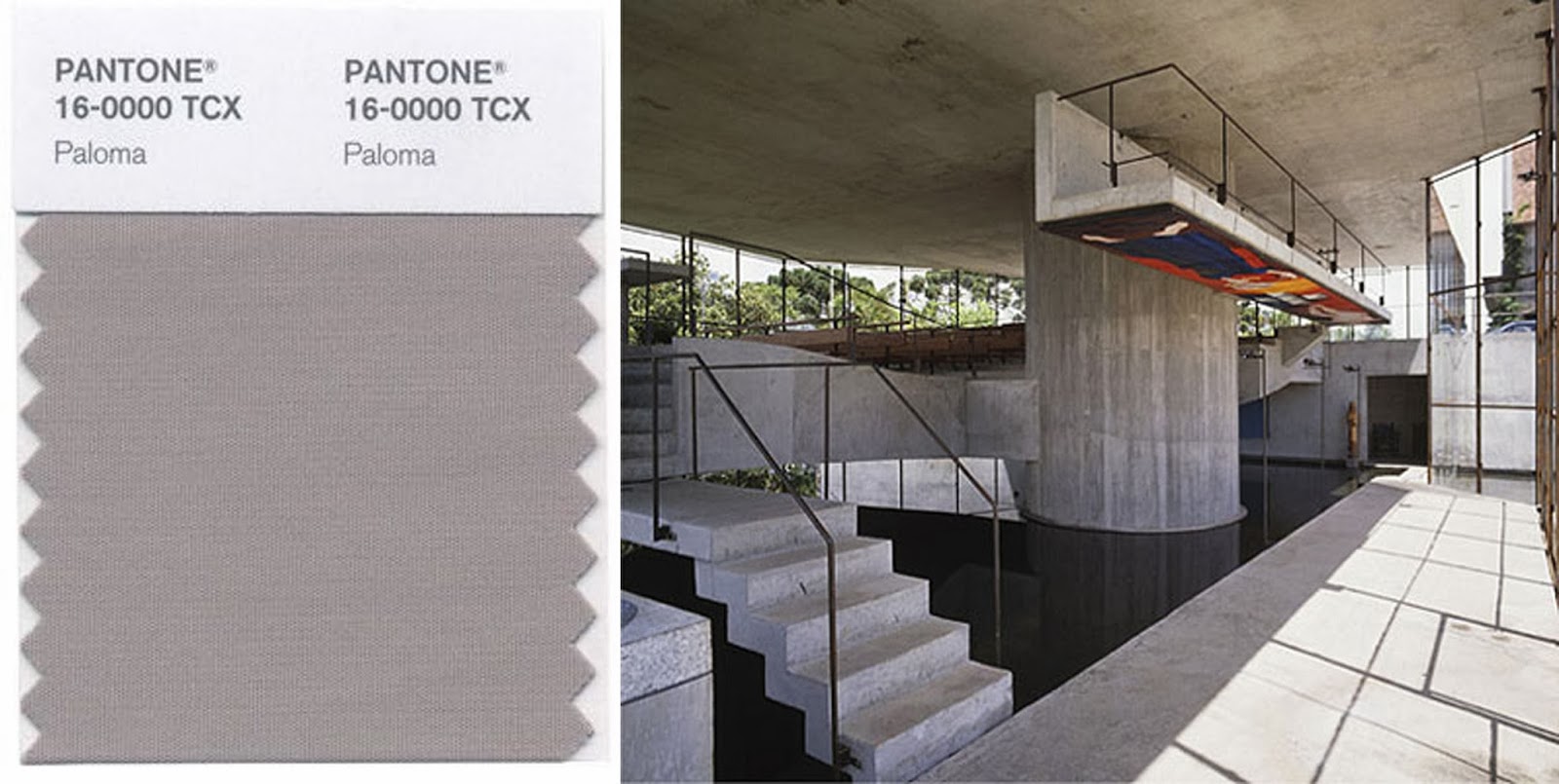
Paloma: Paloma’s contemporary tone is reflected in this concrete building, and both are sleek and timeless. 


Chapel of St. Peter, Campos de Jordao, Brazil, 1987

Placid Blue: The serene nature of Placid Blue makes it a top choice for coastal living. Notice how this shade is used as an accent on the chairs and the bookcase. 


Photo Credit – Willey Desgin, LLC

Sand: With a name like ‘Sand’, one would typically think of the beach, but here we see how Tom Brady and Gisele Bündchen’s rustic Los Angeles home utilizes this color’s versatility, inside and out. 


Photo Credit – Architectural Digest


Women’s and Men’s Specialty Colors

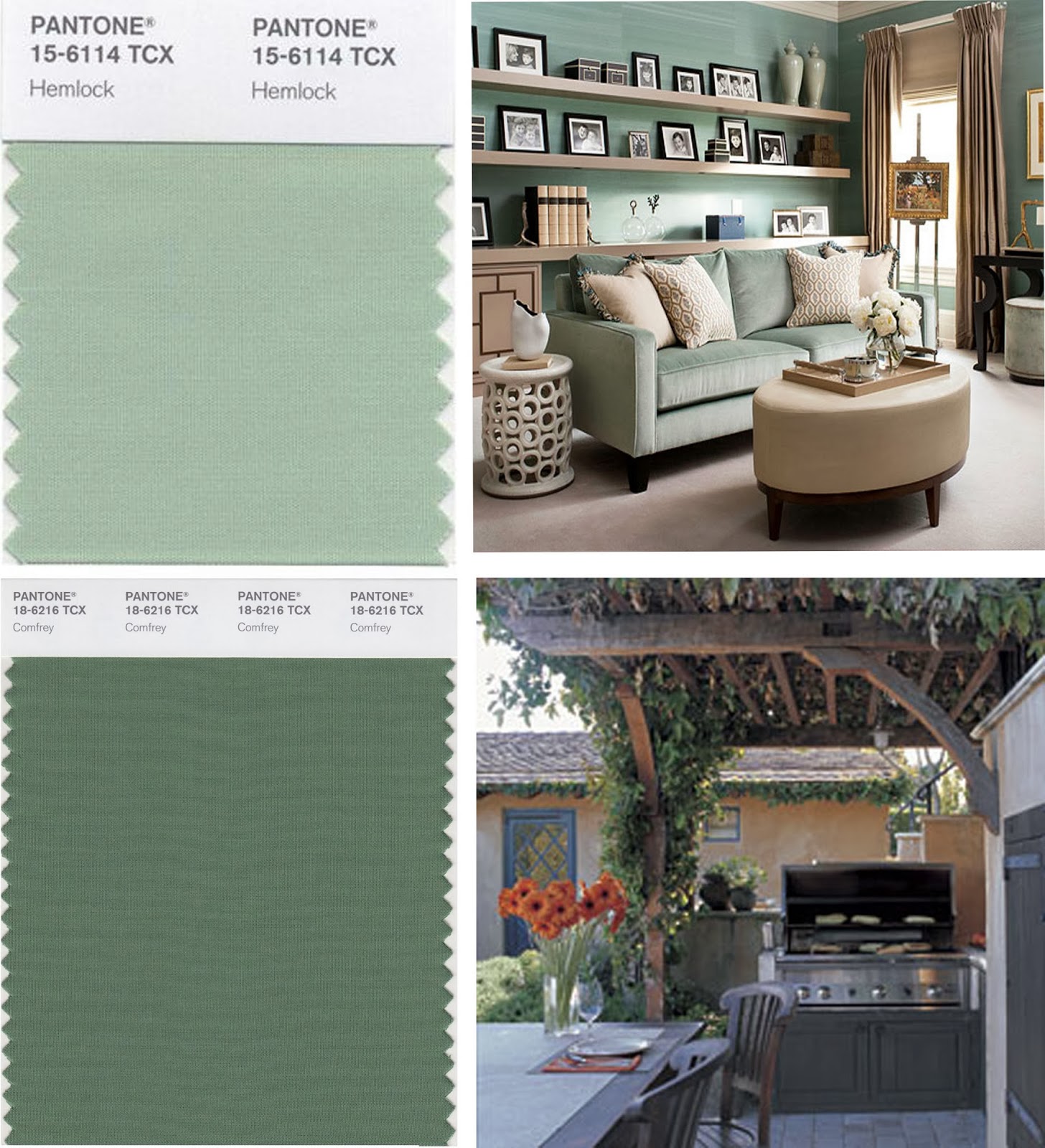
Hemlock + Comfrey: Hemlock is a much softer pastel and Comfrey is a bit deeper than the 2013 Color of the Year, Emerald. Both shades are meant to add the natural touch of green to round out the 2014 spring color palette appeal.


Green shades enliven indoor and outdoor spaces.

Radiant Orchid + Magenta Purple: Radiant Orchid’s bold, chic color is the 2014 Color of the Year; its rich-toned counterpart is just as worthy as it exudes a sense of regality.


These vibrant purples and an ethnic print
create a culturally chic home accent accessory.

Violet Tulip + Purple Haze: Violet Tulip evokes romance and wistful nostalgia. Purple Haze is a deeper, stronger version of Violet Tulip, but it still has its soft side. 


The blend of these soft violets with the dash of black
and Dazzling Blue make a whimsical piece of artwork.


Be on the lookout for the shades of the Pantone® 
Color Report Spring 2014 and let us know which are your favorites! 


Filed Under: Uncategorized

Not Just Office Space: How to Increase Workplace Effectiveness

December 12, 2013 By Don Eberly 2 Comments

The modern workspace has evolved from merely a place for employees to sit and work alone in unadorned, individual cubicles, to well-designed, engaging spaces for personnel to work and cooperate for a common goal. For business and building owners, the design of the workspace has gained value like never before. Location, amenities and service offerings are just a few elements seen as essential to effective working environments. The November / December 2013 issue of BOMA Magazine explores the transformation of the designed workplace.

“Designed to be Effective”
BOMA Magazine – November / December 2013
Commercial designers, here are a few tips stemming from the experts at BOMA Magazine for revamping a client’s office area to boost workers’ performance.

  • Understand the functionality of the space. Designers need to understand that jobs are constantly progressing, thus altering the function of workspaces. Collaboration and spaces for optimal group work are becoming more necessary as, in the knowledge sector, a single person sometimes no longer has all the required skills and background to complete a job alone. In order to meet this need, a variety of collaborative spaces need to be provided. This affords employees flexibility for where they want to work as a group, which can lead to increased productivity.
  • Suggest an open layout. Moving towards visibility in the workplace can promote an accessible, cohesive environment and help develop office culture and values. Robert A. Peck, director of Consulting for the Southeast Region at the architectural firm Gensler, says, “If we’re sitting where we cannot see people, we tend to forget about them. In an open environment, it’s harder to forget. So we can facilitate collaboration without forcing it.”
  • Provide space for each type of worker. While collaborative space is critical, surveys have found that 54 percent of time spent by those in knowledge-sector businesses is spent in “focus” mode. Some employees thrive in distraction-free environments to focus, while others work better in ‘buzzing” surroundings. Commercial designers should have a mix of private and open spaces for their clients, so both types of people are catered to. 
  • Redesign or add social spaces into the office interior. By transforming social spaces like coffee bars or breaks rooms, employee satisfaction increases, including interaction, acceptance and encouragement. Often, conversations that start as social shift into business which advocates for connectivity.

Workspace design is being asked to lend to effectiveness, no longer surviving on location and conveniences. Making these changes will grant employees the tools they need to perform their best at their jobs.

Commercial architects and designers, are your workspace designs unlocking worker productivity? Please feel free to share your ideas and thoughts. To read more commercial design tips from the experts at BOMA Magazine, click on the photo below.

BOMA Magazine – November / December 2013

Filed Under: Uncategorized

Why Bee Health Matters

December 4, 2013 By Don Eberly Leave a Comment

To our horticultural industry readers, this week’s blog post is specifically for you. Some of you may have noticed a severe decline in the bee population in recent years. The November 2013 issue of Nursery Management delves deeper into the possible cause of the drop in bee mortality. 
“Why Bee Health Matters”
Nursery Management – November 2013
The domesticated honey bee population has declined nearly 50 percent in the last 50 years, and this year was one of the worst on record with some bee keepers losing 60 percent of their hives. This is disturbing news to many because bees account for one-third of the food we eat, including any vegetable, fruit or nut that grows from a flower. Examples of these are blueberries, almonds, squash, and tomatoes – all of which require pollination. The Pollinator Partnership says that pollinators add $217 billion to the global economy, while honey bees alone are responsible for $1.2 billion to $5.4 billion of agricultural productivity in the U.S. 
One of the possible causes is Colony Collapse Disorder – the phenomenon occurring when worker bees disappear, leaving behind a queen, food and a few nurse bees. Other causes that affect bee health are mites, viruses, bacteria, disease, poor nutrition, beekeeping practices, transportation of hives across country, habitat loss, genetically modified plants, lack of genetic diversity, weather, and pesticides. 

“Why Bee Health Matters”
Nursery Management – November 2013

Of all the pesticides bees can be exposed to, one class has been in the media and regulatory spotlight – neonicotinoids. A bill has been submitted to Congress for the suspension of four neonicotinoids until their EPA registration review in 2019 – dinotefuran, imidacloprid, clothianidin, thiamethoxam. To help regulate the issue without putting companies out of business, the EPA announced label changes to “better protect bees and other pollinators” from the four specified neonicotinoids. The EPA intends to have the new language placed on “as many products as possible by the 2014 use season.”

Joe Bischoff, director of government relations at ANLA, says, “In general, the language used in the new EPA labels is flexible enough for the green industry to work within the new guidelines and still be able to use neonicotinoids…As an industry, we are stewards of these chemistries just as we are of the land. We must be responsible and use them for their intended purpose and for their benefit.”

To read more of Nursery Management’s coverage of bee health, click on the photo below.

Nursery Management – November 2013

Filed Under: Uncategorized

History of the Hashtag

November 26, 2013 By Don Eberly Leave a Comment

What started off as a modest symbol for “number” on the keys of the telephone has risen in only six years to be one the strongest marketing tools of the 21st century, connecting hundreds of millions of people together. But what is it about this hashtag symbol that makes it so powerful for public relations, marketing and advertising firms?

Social media marketing has skyrocketed to become a necessary element in any business’ brand. Reaching your company’s target audience through a strong online presence has never been easier, yet strategy is still crucial. Hashtags make messages more searchable; similar to a mini search engine optimizer within just 140 characters. By using the symbol, keywords associated with your industry become more than just words, but turn into hyperlinks that millions of potential consumers can easily find. Thus, creating the opportunity for countless digital impressions.

The hashtag also crosses virtually every medium. It can be utilized on social media platforms such as its origin, Twitter, as well as Facebook, Instagram, Google+, and Flickr. The hashtag is also always making its way into non-interactive mediums like billboard messages and commercials. By using this symbol as a tool for brand awareness, business-to-business or business-to-consumer interaction is effectively elevated.

This infographic from Offerpop, sourced from PR Daily, 
documents the short but influential history of the hashtag.
Interested in learning more about hashtags as well as the benefits of social media marketing? Please feel free to post your questions and comments below, or contact the ECPR team at info@eberlycollardpr.com.

Filed Under: Uncategorized

Julia Molloy Enlightens Atlanta Designers with 7 Secrets of Top Luxury Interior Design Firms

November 22, 2013 By Don Eberly Leave a Comment

On November 13, the ECPR team partnered with the Atlanta Decorative Arts Center (ADAC) to help reveal the 7 Secrets of Top Luxury Interior Design Firms, presented by our good friend and the design industry’s leading business expert Julia Molloy, president and CEO of Molloy Management Group. As the premier operations and luxury branding specialist in the design industry, Julia works with design company CEOs and owners to increase their efficiencies, develop business plans, boost profits, and connect with a more affluent clientele. Her company, Molloy Management Group, Inc., specializes in advising design professionals how to develop luxury brands and build celebrity statuses.

With many years of experience in the field, she has determined seven distinct patterns, or traits, among her most successful, high-end designer clients. With the opportunity to present at ADAC and share her proficient knowledge with interior designers and showroom managers based in the South, Julia presented one of the most engaging and applicable sessions we have ever had the pleasure of attending. The audience members widely seconded this sentiment, with rave reviews following the event.

For those who work in the design world and were unable to attend, we have highlighted a few key points of relevant interest, stemming from Julia’s presentation, 7 Secrets of the Top Luxury Interior Design Firms.

Julia Molloy presenting the
“7 Secrets of Top Luxury Interior Design Firms.”

What is Luxury?

It all begins with the question, “what is luxury?” Julia defined luxury as the ability to “satisfy every need and go beyond the ordinary into the realm of the extraordinary. It is about elevating the mind, body and spirit.” Luxury must be developed inside an organization before it can start providing luxury as a service and viable reference to clients. The seven secrets provide the necessary elements to becoming luxury internally, and then servicing with luxury externally.

Luxury Starts from Within

In terms of internal business operations, a design company’s brand vision sets the foundation of what it stands for and provides. Brand Vision should be instilled in a firm’s staff as well. As soon as employees are hired, the company structure must be set to evoke brand-aligned staff members and a true sense of internal organization.

Clear roles and accountabilities must be established for each teammate, with centralized and easily accessible information that requires limited presence of the principal designer when needed, allowing for a streamlined approach. There must be short-term tasking and team meetings where everyone can discuss their completed, current and upcoming tasks. From there, documentation of regular company practices and forms should occur, whether internally or in the field. This will help uphold the standards of quality and efficiency for the company.

“Designers and showroom managers visit ADAC
for Julia Molloy’s presentation.”

Branding and Public Relations are Essential

Once the brand vision, company structure, and documentation processes are solidified, then brand development can start to take shape. Branding should authentically reflect a design firm’s key characteristics. The key characteristics are a firm’s “navigational compass,” which directs the decision making process and, ultimately, aligns all actions to the brand vision.

Top luxury interior design firms place public relations and press as high priorities. A publicist can help a designer become an active and renowned figure in their community, which will help them gain popularity and publicity. Design firms and their public relations teams should develop a list of targeted publications, websites and blogs for submitting the designer’s well-planned media kit and build relationships with all of the publications’ editors and writers. If an interior design firm desires the most return on investment, it will work with a reputable public relations firm who specializes in the industry.

Luxury Has the Potential to Grow and Evolve

A brand and business development team such as Molloy Management Group, and an industry-experienced, full-service public relations firm like our own Eberly & Collard Public Relations, can help take a firm from its “start-up” phase to celebrity standing.

Active public relations and press coverage help design firms remain present, known, seen, heard, and available.

According to Julia, when an interior designer’s clients see his or her name published, it makes them feel good and say, “That’s my designer!” This equates to an elevated position and feeling for the client. As a result, the client acknowledges the luxury of the design firm, even after the project has been completed. In turn, this can generate customer loyalty and referrals. Coming full circle, the purpose of public relations for a designer involves positioning the designer as a “go-to” expert resource for creating both beautiful and useful living spaces, but also to provide the client a truly luxurious experience.

These are only a few of the tips provided by Julia Molloy. Her knowledge is impressive and vast; to learn more, visit the Molloy Management Group website at www.molloymanagement.com. To view other events at the Atlanta Decorative Arts Center, visit www.adacatlanta.com. For more information about Eberly & Collard Public Relations, visit our website at www.eberlycollardpr.com.

Our most sincere thanks to Julia for enlightening the Atlanta design industry, and our appreciation to the highly talented and devoted staff at ADAC for hosting the event.

Members of the ECPR team with Julia Molloy of Molloy Management Group
and Amy Musarra of ADAC.

Filed Under: Uncategorized

Object Lesson in Architectural Record

November 12, 2013 By Don Eberly Leave a Comment

The November 2013 issue of Architectural Record features six noteworthy buildings set on university campuses across the country. The article titled “Object Lesson” is about the University of Arkansas’ Fay Jones School of Architecture built by one of its own, while combining the campus’ historical elements with modern flare.
Fay Jones School of Architecture – University of Arkansas

When the university was granted $10 million to update the School of Architecture, it came with a very tight schedule, requiring initial plans to be submitted within weeks. With the limited amount of time available, school leaders turned to its own architectural department.

A combination of old and new
Marlon Blackwell has been a professor at the University of Arkansas for over twenty years and serves as the current chair of the architectural department, all while owning his own private firm. His firm, Marlon Blackwell Architects, created a minimalist design for the Jones building and added a four-story 35,000-square-foot attachment to the current library.

Click here to view the building’s blueprints.

By fusing the old structure with the new wing, the distinct architectural languages and building methods are made clear. The building has new studio, classroom, and administrative spaces, and also features a 200-seat auditorium, model shops, a gallery, and a rooftop terrace. In addition to the architecture department, the building houses the landscape and interior design departments. Completed in August 2013, the overall project was 90,955 square feet and cost $32.4 million.

Learn more about the Fay Jones School of Architecture.

Below are companies also involved in the development and construction of the Fay Jones School of Architecture. To see blueprints and learn more about this project or the other six university educational facilities featured in Architectural Record’s November issue, click the photo below.

Click here to learn more about the six university buildings.

Credits

Architect: Marlon Blackwell Architect
Associate Architect: Polk Stanley Wilcox Architects
Engineers: Kenneth Jones & Associates; TME; Development Consultants
Consultants: Crafton Tull Sparks; Clarkson Consulting
General Contractor: Baldwin & Shell Construction Company

Sources

Roofing: Johns Manville Roofing
Green Roof: LiveRoof
Fritted Glass: Viracon
Glass Doors: Oldcastle Building Envelope

Filed Under: Uncategorized

Furniture Today’s 2013 Consumer Buying Trends

November 7, 2013 By Don Eberly Leave a Comment

Furniture Today is a leading news source for furniture industry market analysis, product trends, and retailer and manufacturing news. Recently, the magazine released its “2013 Consumer Buying Trends,” stocked with statistics varying by region, buyer demographics, amount spent, and specific populations. For furniture manufacturers and retailers, this informative information is crucial for business advancement and potential new product development. Stemming from the report, below we have dissected some key points for observation in the upcoming quarters as well as provided marketing tactics for each trend.
2013 Consumer Buying Trends
Master Sales for Master Bedrooms

The master bedroom is the inner sanctuary of the home and it is evident that homeowners are not skimping on the expense of their serenity. In 2012, U.S. households bought $8.8 billion-worth of master bedroom furniture, where all the buyers spent a median of $599. Midwest households spent the most with a $999 average, while Northeastern households spent the least with an average of $525.

Baby Boomers comprised two-fifths of all buyers in 2012. Younger Boomers (ages 49-57) spent a median of $849 and Older Boomers (ages 58-67) spent the most, a median of $1,549.

In 2013, 5.5 million households plan to buy master bedroom furniture. Adult Millennials, currently ages 18 through 32, are 65 million strong and are excellent master bedroom prospects for 2013 because many are in the process of designing their own homes and personal spaces. Comfortable luxury is the desire of most Millennials. Strategic marketing catered towards these interests can boost a company’s revenue significantly.

Master Bedroom Trends

Casual Dining for Millennials

Millennials love to eat out, but it appears that many more are opting for dining in the comfort of their own backyards. This year, 4.1 million consumer households plan to buy casual dining furniture, with Millennials and Young Boomers purchasing at considerable rates. In 2012, on average, Millennials spent $199 and Young Boomers spent $349. The highest amount of buyers came from the middle class, with incomes between $50,000 and $99,999.

When creating a marketing strategy, it is important to not only consider the consumers’ age and income, but also the location of the buyer and the purpose of the product. The South spent the most on casual dining furniture with a $299 median, while the West spent the least with only a $99 median. Targeting a specific region can help cover a large demographic efficiently. 

Casual Dining Trends

Millennial Entertainment

The commonplace of flat-screen TV’s and household gaming equipment caused the peak of entertainment furniture sales in 2004 and 2006. In 2012, the top-selling case goods product and the fourth-most popular furniture product overall was entertainment furniture, with 5.2 million U.S. households investing an estimated $5.5 billion in retail. By generation, Millennials (ages 18-32) and Generation X (ages 33-48) are the best prospects for buying entertainment furniture in 2013.

Last year, Millennials spent an average of $199 on entertainment furniture and Generation X spent $225. As many retailers and manufacturers are aware, casual dining and entertainment furniture go hand-in-hand for providing comfortable luxury items for the home. Marketing products to specific age groups allows the consumer to purchase products that are well-suited for their own lifestyles. Once that vision is seen and accepted, then a sale can be made.

Entertainment Furniture Buying Trends

Trend spotting is meant to raise awareness and inspire action. Targeted strategic marketing can help address these new findings. We hope this revealing information sparked our furniture retailer and manufacturer followers’ interest and drives toward exponential business growth.

Filed Under: Uncategorized

  • « Previous Page
  • 1
  • …
  • 7
  • 8
  • 9
  • 10
  • 11
  • …
  • 44
  • Next Page »
Expertise Best PR Firms New York
50Pros 2025 Top PR Firms
Best Branding Agency award
2025 ABC Badge

Expertise

  • Expertise
  • Integrated Marketing
  • Branding
  • Digital Marketing
  • Public Relations
  • Media Relations
  • Advertising

About

  • About Us
  • Leadership
  • FAQ
  • Process

Industries

  • Industries
  • Architecture
  • B2B Professional Services
  • Building Products
  • Construction
  • Consumer Products & Services
  • Engineering
  • Horticulture & Landscape
  • Hospitality & Travel
  • Interior Design
  • Kitchen & Bath
  • Real Estate Development
  • Portfolio
  • Blog
  • Get Started
  • Locations
Eberly & Collard

A national firm specializing in integrated marketing communications, corporate branding, product positioning, public / media relations, and digital / social media.

ATLANTA

1355 Peachtree Street NE, Suite 1260
Atlanta, GA 30309-3273
404-574-2900

NEW YORK

1740 Broadway, Floor 15
New York, NY, 10019-4605
332-334-2900

© 2025 Eberly & Collard PR  |  privacy policy  |  site map  |  website design by Sumy Designs, LLC.