
The businesses achieving the strongest performance in Meta Business Suite and Ads Manager today—and positioned to continue doing so in 2026—are moving beyond incremental campaign adjustments. They are reengineering how Meta ads are built by integrating creator content directly into the paid advertising process through Meta partnership ads.
For a long time, brands have managed influencer and creator content separately from their paid advertising. Influencers would post organically on their own channels, while conversion-focused ads ran only from a business’s account, with little connection between the two. Creators were largely used for product or brand awareness at the top of the funnel, and their impact was measured by likes, impressions and saves rather than conversion metrics. Meanwhile, paid social media execution focused on traditional ad formats created by the business or its Meta ads agency.
That separation made practical sense in earlier phases of social media marketing. However, Meta’s evolution now favors content that feels native to the feed. Ads activated through creator identities often perform better than polished brand content, driving lower acquisition costs and stronger progression from click to conversion.

This shift has prompted leading marketing teams to rethink their approaches. The question is no longer whether creators should be involved in brand campaigns at all, but how their content can be structured, licensed and deployed inside Meta’s paid system to improve measurable outcomes.
Why Creator-Led Paid Partnerships Are Outperforming Traditional Ad Models
To understand why this shift is occurring, it is useful to consider how creator-led Paid Partnership campaigns are run in comparison to more traditional Meta ad formats.

In practice, Meta partnership ads involve the brand and creator aligning on the content concept and usage terms up front. The creator then publishes the post under their own handle, and the brand sends a Paid Partnership request through Meta to secure ad usage rights. Once approved, the content is activated in Ads Manager—sometimes even served from the creator’s account—for targeted distribution, testing, and ongoing optimization within the brand’s performance campaigns.
Meta’s internal studies indicate higher purchase intent and cost efficiency when campaigns combine creator-led assets with paid targeting. The explanation is fairly straightforward: Audiences respond more naturally to brand storytelling that mirrors peer behavior and online recommendations.
Creator-generated Reels and Stories tend to feel contextual, relatable and experience-based, which often generates more engagement and conversion than ads repurposed from static brand creative. When deployed using Meta’s Paid Partnership functionality, ad assets retain the creator’s authenticity while benefiting from advanced media targeting and measurement frameworks.
Structuring Creator-Led Ads: From Micro-Creator Strategy to Paid Activation
A key advantage of creator-driven advertising lies in pairing micro-creator strategy with direct Paid Partnership activation inside the Meta Ads Manager platform—one of the most effective models for how to integrate creator content into Meta ads at scale.
Rather than investing heavily in content from a small number of macro-influencers, forward-thinking teams are working with multiple micro-creators—individuals with smaller but highly engaged followings, often aligned to niche audience segments or professional interests. Their content packages are generally more cost-accessible, which enables broader testing and greater creative variance without the financial risk typically associated with high-profile creator campaigns.
The goal is not to rely on organic reach. Performance scale is generated through paid media. Marketing teams and agencies test multiple creator-led assets at a lower initial cost, evaluate which variations resonate most effectively, then use Meta’s amplification tools to scale only the top performers.
To execute this effectively, campaign workflows must be structured around Paid Partnership activation from the start. This involves:
- Researching and selecting creators strategically, based on audience alignment and messaging fit
- Planning the content concept collaboratively, so assets are designed for both visual resonance and performance use
- Negotiating usage rights and influencer contract terms upfront, ensuring clarity around paid licensing and ad deployment
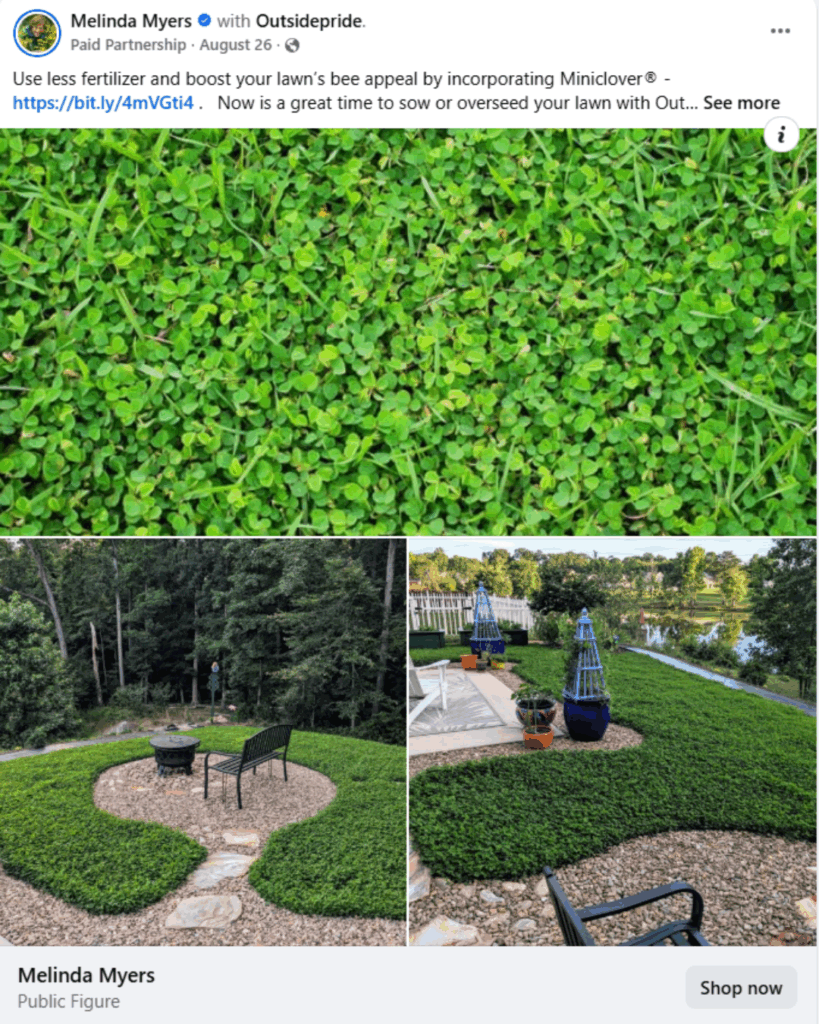
Once the creator publishes their post on Instagram or Facebook, the brand initiates a Paid Partnership request through Meta. After creator approval, the content becomes accessible in Ads Manager as a fully enabled ad unit—eligible for targeting, A/B testing, optimization, and scaling across campaign objectives.
Performance Testing and Full-Funnel Measurement
Unlike organic influencer posts, which are typically evaluated using surface-level engagement metrics such as likes and comments, influencer ads via Meta campaigns require measurement against full-funnel business indicators. Depending on the objective—whether direct sales, registrations, inquiries, or qualified traffic—brands should prioritize metrics such as:
- Cost Per Acquisition (CPA)
- Return on Ad Spend (ROAS)
- Observed conversion lift
- Progression from initial interaction to next-step action (e.g., video view → landing page visit → purchase or inquiry submission)
This methodology applies across industries. A consumer brand may measure e-commerce conversion or add-to-cart behavior; a business-to-business manufacturer or design company may track specification requests, demo bookings or event registrations. In both scenarios, the purpose of creator-led ads shifts from generating visibility to proving performance.

Organizations can still see success by managing influencer relationships and Meta ads independently. However, when assessed in contrast, unified execution consistently achieves faster optimization cycles, greater testing depth and stronger aggregate impact.
In other words, running influence marketing and Meta advertising workflows separately can work—but rarely with the same effectiveness as when creator content, activation strategy, and paid optimization are coordinated in tandem.
Implementing Creator-Driven Performance at Scale
As creator-led advertising and paid systems continue to converge, the traditional division between influencer marketing and performance media is diminishing. With Meta’s tools now enabling campaigns to activate creator content within structured ad frameworks, successful execution requires alignment across several key areas, including:
- Influencer partnerships with pre-planned usage and licensing terms
- Content strategy tied to business objectives
- Media planning and ad optimization within Meta
- Performance analysis beyond engagement-based metrics
Most companies’ internal marketing and social media teams are not yet structured to manage that integration across departments or internal approvals, which is why many brands are turning to external partners, such as digital marketing agencies that specialize in influencer marketing, with cross-functional capability.
How Strategic Agency Support Accelerates Adoption
Partnering with a digital public relations and marketing agency experienced in both influencer relations and Meta advertising allows businesses to activate this approach without disrupting existing structures by providing:
- Contract design and usage-right oversight for Paid Partnership activation
- Strategic content planning aligned with influence and conversion objectives
- Meta Ads Manager configuration and optimization
- Ongoing data and analytics review, along with campaign refinements
This shift transforms creator content from isolated awareness deliverables into fully measurable revenue assets within Meta Ads Manager. As Meta’s platform continues to evolve in 2026, the brands positioned to benefit most will be those willing to adapt—reassessing their social advertising strategy instead of remaining complacent with current performance.
The real opportunity is not simply in partnering with creators, but in strategically integrating their content through Meta’s Paid Partnership framework and activating it as part of performance campaigns.
Eberly & Collard Public Relations works with businesses to build and manage fully integrated creator-led campaigns. If your 2026 Meta strategy includes creator content (and it should) now is the time to operationalize it with the right structure, partnership model and performance metrics.
Learn how ECPR can support your Meta and influencer strategy by contacting us at: www.ecpr.com/contact.
