
Eberly & Collard
Get Started
  • Home
  • About
    • About ECPR
    • Leadership
    • FAQ
    • Process
    • Careers
  • Expertise
    • Expertise
    • Integrated Marketing
    • Branding
    • Digital Marketing
    • Public Relations
    • Media Relations
    • Advertising
  • Industries
    • Industries & Sectors
    • Architecture
    • B2B Professional Services
    • Building Products
    • Construction
    • Consumer Products & Services
    • Engineering
    • Horticulture & Landscape
    • Hospitality & Travel
    • Interior Design
    • Kitchen & Bath
    • Real Estate Development
  • Portfolio
  • Blog
  • Contact
Home » Search for "thought leadership"

Search Results for: thought leadership

How to Develop a B2B Thought Leadership Marketing Strategy

June 5, 2020 By Jeff Collard 1 Comment

In a crowded marketplace, it is estimated that we interact with over 3,000 brands in any given day. Understanding the process of how a well-established B2B (business to business) thought leadership marketing strategy is developed and exactly how to convey your brand’s value proposition clearly and effectively is paramount to ensuring your brand voice is heard. When done properly, this can be a powerful tool that is not just another piece of marketing jargon, but instead a way to solidify and position your company as a leader in its field.
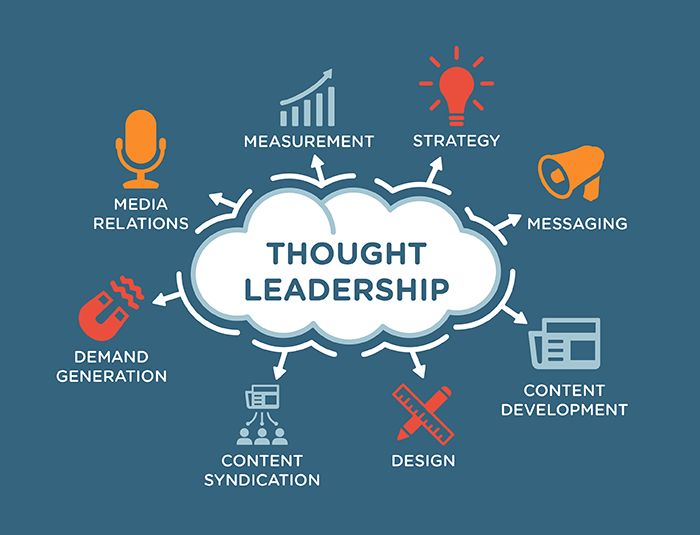
Thought Leadership Marketing

A study conducted by the Public Relations Society of America (PRSA) determined that 83% of B2B buyers believe that ‘thought leadership’ had increased their trust in organizations, with 88% saying they use thought leadership to build a shortlist of potential vendors. The study also stated that approximately 50% of C-suite executives and decision-makers believed thought leadership content had a direct impact on awarding business. 61% of C-suite executives say they are willing to pay a premium to work with an organization that has articulated a clear vision.

The most interesting takeaway from the study suggests that 45% of B2B marketers said they take advantage of thought leadership marketing. This finding presents a unique opportunity and an excellent way to breakthrough barriers in your specific sector, become an industry disruptor and increase your sales and new business.

Thought Leadership Marketing Defined:

So, what exactly is thought leadership? By definition, thought leadership is a method of marketing which positions you as an expert and authority in your industry and conveys that your company or brand has deep understanding of the subject matter at hand. To be a thought leader in your industry is to share the philosophies and business knowledge that your company uses. It can be a unique take or perspective that will create a significant impact on a business model or even the sector’s marketplace at large. Thought leadership builds brand affinity which, in turn, enacts trust. This is an excellent entry point and foundation when employing demand generation as a strategy. Creating awareness and trust, which is one of the core components of demand generation, is often accomplished with thought leadership.

Below, we have outlined three main cornerstone strategies that, when followed properly, are proven to accelerate your industry positioning, and will also propel your company as a thought leader in your industry or sector.

Thought Leadership Marketing Defined

Build Thought Leadership Through Media Relations –

In order to establish yourself as a thought leader in your industry, you need to reach your target audience. This is where the media can help amplify your message as well as your brand. From traditional channels like business newspapers, B2B industry trade magazines, business radio shows to growing mediums like podcasts, there are many avenues for you to reach and, thus, influence others.

It is important to note that media relations outreach is a separate strategy in and of itself. Working with a public relations firm that specializes in your industry niche is vital to success. Otherwise, you will have to work on the time-consuming process to pitch yourself to media outlets and journalists to build trust and make the case for why you should be featured in an article or interview.

The influx of different channels helps tremendously in these efforts. Focus on niche publications that targets your industry. With patience and consistency, partnering with the media will help you get in front of your audience and establish your place as a thought leader. Once you are featured, you will start to earn credibility and can use your new media placements to show that you are considered an expert in your field. Then, it is more likely other journalists or publications will become interested in connecting as well.

We recommend studying each and every individual media outlet to determine exactly what topic and format is best suited for them. The largest mistake we see people make is the use software to mass (or blanket) pitch the same information to every media outlet out there. This is not the proper way to influence the media outlets to profile or feature your business or interview you.

You’re only a thought leader if you truly showcase expertise in your field and offer valuable insights and opinions. Sound media relations is a catalyst to accomplish this.

Establish Brand Authority on Your Owned Media Channels –

As we discussed above, gaining credibility is one of the foundations of thought leadership. While media engagements require cooperation with a journalist or publication, your brand’s owned media channels allow for self-publication of your thought leadership articles or whitepapers instantaneously. Social media channels, blogs, podcasts, and webinars are a few of the main examples of owned media channels. Defined as brand channels you or the company owns, you and your marketing staff members have the freedom and ability to publish as you see fit.

Thought leadership marketing allows you to get in front of your audience on your own terms. However, this doesn’t mean you’ll want to post and share content on a whim. Creating a content strategy with a posting schedule is an important step toward gaining trust with your audience, while establishing yourself as a B2B thought leader.

First, you have to determine your audience and the sectors that reside within the audience. These are the prospective customers you are trying to reach. Who are your customers and what questions are they asking? Once you establish this, you can begin the process of crafting content that is targeted to this group. This step will also reveal which channels you should use to deliver your message. For example, if your B2B target audience includes professional service companies, you’ll want to focus on blogs and LinkedIn much more than Facebook or Instagram. White papers with broader subject matter may also resonate with them, more so than shorter content that consumer product companies tend to seek.

Regardless of how and where you are publishing your content, it is essential to establish your frequency. You want to publish often enough that people remember and identify you as an influencer; but, you do not want to flood your followers’ timelines and blog subscription email inboxes with content lacking research and relevance, just to hit a number. Each post should add value and include a call-to-action.

Activate New Audiences with Public Relations Engagements –

One search for “thought leaders” on YouTube will present hundreds of videos that feature speeches from various influencers across a wide variety of industries. Speaking engagements work because they allow you to share a message with a specific audience free from other distractions. Seminars and conferences focused on your industry are the most ideal settings for delivering this message, because they are filled with attendees eagerly awaiting your message. Even though the current situation with the global pandemic has caused in-person events to be cancelled or postponed, virtual speaking engagements and events are thriving and are here to stay. With the proper planning and strategy, it is even possible to create your own “industry though leadership” related event or webinar. This is a valuable means by which to reach your intended audience.

Utilizing social media for both pre- and post-event messaging surrounding your chosen topic is another excellent way to reinforce the message you are trying to convey. Another excellent way to share your thoughts is by hosting your own podcast. We wrote a previous blog post about using a podcast as a vehicle for publicity. It contains several valuable steps on how to go about this process. The equipment needed is extremely low cost to put together a podcast.

Any medium that allows you to speak passionately about your authoritative topic or industry will go a long way proving your status as a thought leader. Maintaining the aforesaid steps in a strategy that is consistent is key to saturation for your thought leadership marketing plan.

If you are not leading, you are following. B2B buyers and decision makers want to work with leading brands. It is crucial to build a reputation through strong, compelling, accessible, and impactful thought leadership marketing content. Once you’ve built a strong foundation of trust and confidence with your audience, the rest of your marketing strategy is a matter of ongoing creative and maintenance.

Please contact us to learn more about how our firm works with brands to create successful thought leadership marketing plans.


 

Filed Under: Uncategorized

Leadership

LEADERSHIP

Don (1)

Don Eberly

President / Chief Executive Officer

Don Eberly is president / chief executive officer of Eberly & Collard Public Relations, a national and international firm specializing in branding, public relations, media relations, advertising, digital marketing, and integrated marketing for business clients across a wide array of industries. In his role, he oversees the strategic development and day-to-day success of clients’ customized marketing program plans as well as works closely with our firm's Atlanta and New York City team members.

Co-leading one of the "Best PR Firms in Atlanta" (awarded by Clutch and the Atlanta Business Chronicle) and "Top PR Firms in New York" (awarded by Expertise), Don’s scope of responsibility involves designing communications campaigns to help clients establish and grow mutually beneficial relationships and productive connections with their publics. Under his leadership, the ECPR team has created and implemented thousands of marketing and publicity campaigns, resulting in positive media coverage, thought-leadership positioning, product or service recognition, and digital marketing growth for national and international clients.

Early Career
Years of Experience
Did you know?

Prior to the inception of Eberly & Collard Public Relations, Don earned his degree in education. In addition to teaching, he worked as a director and then vice president at two of the nation’s largest agencies where he oversaw multiple offices and serviced a gamut of clients such as Darden Restaurants, Microsoft Corporation, Anheuser-Busch, Quest Diagnostics, The American Red Cross, United Way Worldwide, and many others.

In 2002, he established Eberly & Collard Public Relations to provide an unapparelled level of service to clients whose primary goal was to achieve stronger business-to-business or business-to-consumer cognizance for their businesses in an expedited and efficient manner. One of his primary goals was to offer extremely specialized public and media relations expertise per his clients’ specific industries.

Teaming up with co-owner Jeff Collard during the last 15-plus years, the two have grown ECPR from a small start-up agency to one of the nation’s top marketing resources in branding and public relations within the residential and commercial real estate development, architecture, engineering, construction, and design industries, as well as for manufactures of commercial and residential products spanning numerous categories. Don also co-launched the firm's Hospitality and Travel marketing service programs, which has led to winning numerous coveted awards for publicizing hotels, airlines, tour companies, and travel destinations. He also led the charge to extend the firm’s specializations into the areas of Consumer Products and Services marketing, which has involved working with hundreds of clients to launch and promote thousands of products and services.

  • Don has served as a trainer for the American Marketing Association’s Focus Group Training Certification program.
  • He has conceptualized, produced, managed, and publicized media tours, yielding local, regional, national, and international acclaim for his clients.
  • Speaking and participating on panels, Don is involved with education at marketing symposiums and key industry conferences each year.
  • Don is the Co-chair of Public Relations for CANstruction in association with the American Institute of Architects (AIA).
  • He has conceptualized and managed client events with renowned luminaries such as August Busch, Gloria Estefan, Martha Stewart, John Giddings, and many authors.
  • Don and his team write and contribute byline articles regarding a range of marketing, public relations, advertising, social media, and product- / service-oriented topics for more than 250 publications each year.
Jeff Collard - Eberly & Collard PR

Jeff Collard

Vice-President / Chief Financial Officer

Jeff Collard is vice president / chief financial officer of Eberly & Collard Public Relations. His scope at ECPR is multifarious and extends from leading creative conceptualizations for clients’ program plans to driving operational and strategic successes for the firm and its Atlanta and New York City staffs. Jeff leads the agency's Digital Marketing services for clients based in North America, Europe, Asia and other parts of the world. He also oversees ECPR’s strategic performance both internally and in terms of compliance with the commitments the firm makes to its clients, industry associations and members of the media. Additionally, Jeff's creative digital and branding campaigns for clients have earned Eberly & Collard Public Relations multiple awards in the "Branding Agency NYC" category numerous consecutive years.

Jeff collaborates closely with co-owner Don Eberly to supervise client-focused service initiatives are carried out accurately and in a timely manner. He has designed and implemented a high-tech system of project management for the firm’s personnel that has led to award-winning public relations campaigns. In his capacity, he ensures digital marketing, search engine optimization, on- and off-page SEO, branding, public relations, media relations, and other practices involved in integrated marketing are efficient to enhance clients’ overall experiences working with the firm and meet expected Key Performance Indicators for all client campaigns and projects.

Early Career
Years of Experience
Did you know?

Jeff’s background was a major precursor to Eberly & Collard Public Relations’ renowned position as an international public relations practitioner group in the fields of residential and commercial architecture, engineering, construction, real estate development, interior design, landscape design, and as well as for manufactures of commercial and residential products.

His degree in horticulture and design, combined with prior management, marketing and creative roles affiliated with the prestigious Walt Disney World Company property, have afforded him the valuable opportunity to understand the marketing challenges his clients encounter from the area of landscape architecture the whole way to the hospitality and leisure travel industry.

Working in tandem with Don Eberly, Jeff has spent the last 15 years helping to form Eberly & Collard Public Relations into a foundational team of industry analysts, publicists, market researchers, marketing managers, authors, content developers, and print / digital marketing specialists to benefit our clients. Leading major efforts to guide clients in our Hospitality and Travel Industry practice, Jeff's branding concepts and campaigns have helped change public perceptions of travel destinations around the globe.

  • Jeff has increased efficiencies for the management of the firm’s public and media relations programs year over year for 15 years.
  • His taglines and marketing concepts have helped shape brands and how they are perceived from coast to coast and in numerous countries.
  • Jeff has brainstormed creative editorial angles, outlines, and content for thousands of published articles, features, cover stories, white papers, and other content.
  • Jeff is the Co-chair of Public Relations for CANstruction in association with the American Institute of Architects (AIA).
  • Jeff was a co-founder of the BOLD Summit (the Business of Luxury Design) event and symposium- bringing together globally recognized designers and architects for a three-day industry charrette and conference.

Transform Your Marketing Strategy with Brand Storytelling

November 19, 2025 By ECPR Team Leave a Comment

Why Brand Storytelling is Important

Data informs decisions, but stories inspire action.

In today’s fast-paced, content-saturated marketing landscape, facts alone rarely move audiences. What truly captures attention and sustains loyalty is storytelling. Brand storytelling is the art of using narrative to communicate your company’s purpose, values and vision in a way that creates an emotional connection with your audience. It humanizes your brand, allowing customers and clients to see themselves reflected in your mission.

Traditional advertising often prioritizes transactions, highlighting features, benefits and calls to action. Brand storytelling, in contrast, targets emotion and value. It answers the deeper “why” behind what a company offers. Whether your organization operates in a business-to-business or business-to-consumer market, a strong brand narrative turns ordinary marketing messages into thoughtful experiences.

Brand Storytelling

Crafting a Compelling Brand Narrative

At its core, storytelling marketing enables brands to convey values, not just offerings. Customers don’t simply buy products or services; they buy into what a brand represents. By shifting focus from features to feelings, companies can produce loyalty that outlasts a single campaign.

The Foundation of a Strong Story

Every compelling brand narrative is built on three pillars:

  • Purpose: Why your brand exists beyond profit. The strongest stories stem from a clear mission; whether it’s solving an industry challenge, improving everyday life or inspiring positive change.
  • Audience Empathy: A brand story resonates when it shows a deep understanding of customers’ needs, challenges and aspirations. Empathy shifts a message from persuasive to personal.
  • Transformation: In powerful brand storytelling, the customer is the hero, not the company. The brand takes on the role of the guide, providing the tools or expertise the customer needs to overcome challenges. This shift keeps the emphasis on what the customer can achieve with the brand’s support, developing a more meaningful and relatable narrative.

Building Narrative Consistency

Once your brand narrative is defined, consistency is key. Every touchpoint, including internal communications, digital marketing, PR and social media, should align around one cohesive message. Public relations plays a vital role here, authentically amplifying your story through earned media and thought leadership opportunities.

For example, a company in the engineering sector strengthened audience engagement by refining its brand purpose and narrative tone. By centering messaging around innovation and community impact, rather than technical specifications alone, it saw quantifiable gains in media visibility, website engagement and inbound inquiries.

Storytelling

Storytelling in Action: Integrating Narrative Across Marketing Channels

A powerful brand story shouldn’t live in isolation. To truly reshape your marketing strategy, storytelling must be woven through every channel and campaign.

  • Content Marketing: Blogs, case studies and thought leadership articles are natural storytelling vehicles. They allow brands to humanize complex data, highlight real-world outcomes and position their teams as trusted experts. Each piece of content should advance your brand narrative by linking expertise with purpose.
  • Social Media: Social platforms provide the ideal stage for visual storytelling. Share customer success stories, behind-the-scenes moments, and purpose-driven initiatives that invite audiences to bond emotionally. Use authentic, human-centric content to make your narrative relatable and shareable.
  • Public Relations: Through earned media, executive bylines and feature stories, PR extends your brand narrative into the broader industry conversation. A well-crafted PR and brand strategy revamps your company’s message from self-promotion into thought leadership, anchoring your brand in credibility and influence.
  • Influencer Marketing: Storytelling in influencer marketing adds a personal dimension to digital storytelling. Collaborating with trusted industry voices allows your message to reach niche audiences in an authentic, conversational way. Influencers don’t just promote your brand; they embody your story.why brand storytelling is important
  • AI-Driven Storytelling: Artificial intelligence and AIO (artificial intelligence optimization) tools can enhance storytelling by analyzing audience intent and content performance. By leveraging AI insights, marketers can personalize stories while maintaining a human voice, ensuring every narrative resonates with the right audience at the right moment.

Key takeaway: A story is only transformative when it’s consistently told across every platform, channel and conversation.

Measuring the Impact: The ROI of Storytelling

Storytelling may begin with emotion, but its success is backed by data.

Beyond Impressions

To evaluate storytelling’s true impact, look beyond vanity metrics and home in on indicators such as:

  • Brand perception and sentiment: Monitor shifts in positive sentiment or brand favorability over time. For example, a campaign that improves positive sentiment from 42% to 55% signals stronger emotional resonance.
  • Customer trust and loyalty: Track metrics like repeat-purchase rate or email subscriber retention. Even a 5–10% lift after a storytelling-driven campaign can indicate stronger loyalty.
  • Engagement quality (shares, saves, comments): Rather than counting likes, analyze actions that show deeper interaction, such as shares, saves, comments or average watch time. A rise in save-to-impression ratio (e.g., from 1% to 3%) can demonstrate content value.
  • Share of voice within your industry: Use social listening tools to assess how often your brand is mentioned compared to competitors. An increase of 2–5 percentage points in share of voice often correlates with greater brand authority.

These qualitative and quantitative metrics reveal how your story shapes audience behavior and brand equity over time.

storytelling marketing

Driving Long-Term Business Outcomes

Unlike transactional marketing, storytelling composes sustained brand value. Emotional resonance directly influences customer retention, advocacy and willingness to recommend. In fact, research consistently shows that story-driven brands outperform competitors in both loyalty and profitability.

PR’s Role in Measuring Success

Integrated PR and marketing teams can quantify storytelling success through media quality analysis, thought leadership growth and sentiment tracking. That’s why it’s important to partner with a brand storytelling agency with brand strategy services. At Eberly & Collard Public Relations, we often gauge narrative effectiveness not only by reach but also by relevance and how well a story strengthens brand trust and aligns with business goals.

Make Storytelling Your Strategic Advantage

In an era defined by information overload, storytelling remains one of the most powerful tools in a marketer’s arsenal. It fuses purpose, people and performance, helping brands move beyond transactions to cultivate genuine relationships.

For brand and marketing leaders, embracing brand storytelling isn’t a creative choice; it’s a strategic one. The most successful brands lead with empathy, authenticity and a narrative that reflects both their mission and their audience’s needs.

At ECPR, we help brands define and amplify stories that don’t just get attention; they build trust and drive measurable business growth.

Ready to improve your marketing strategy through storytelling? Connect with our team to explore how a purpose-driven narrative can upgrade your brand’s presence and performance.

Filed Under: Uncategorized

Why Every Business Needs a Strategy for Digital Ads

October 23, 2025 By ECPR Team Leave a Comment

Understanding Digital Ads

In today’s digitally driven marketplace, a strong online presence is essential for growth and success. One of the most effective ways to establish and maintain this presence is through digital advertising. Digital ads are paid online promotions that appear on numerous different platforms across search engines, websites and social media platforms. These ads can take the form of text, images, videos or interactive content, and each is designed to capture the target audience’s attention and prompt them to take action, such as clicks, website visits or sales.

For businesses of all sizes and industries, digital advertising serves as a direct connection point between a brand and its audience. Whether a company is business-to-business or business-to-consumer, local or global, digital ad campaigns help reach the right leads at the right time. In a landscape where algorithms and user behavior are constantly evolving, a well-structured digital advertising strategy affirms that brands remain visible, relevant and competitive.

digital ads

Benefits of Digital Ads

A purposeful approach to digital advertising offers numerous advantages, each vital to business expansion and brand evolution. From increasing awareness to enhancing public relations impact, the benefits extend across numerous industries and audience types.

  • Increased Awareness: In an online world flooded with content, awareness expands brand credibility and earns authority. Digital ads help brands and businesses rise above the competition by securing placements in front of high-intent audiences. Through Google Search Ads, display networks and social media advertising, businesses can position themselves where customers are already searching for solutions. This select exposure grows awareness, nurtures interest, and supports conversions at every stage of the sales funnel, keeping a company top-of-mind during key decision-making moments.
  • Precise Targeting: Unlike traditional advertising, which often casts a wide net, digital ads allow pinpoint accuracy. Businesses can choose audiences based on demographics, location, interests, search intent and purchase behaviors. For example, an eCommerce company might focus on users who recently viewed similar products, while a B2B firm could focus on professionals within specific industries or job titles. This level of data-driven marketing maximizes every dollar spent by accessing the most relevant audiences.
  • Measurable Results: Digital ad platforms offer live performance data such as impressions, clicks, conversions and engagement rates. This level of insight allows brands and companies to continually refine their digital ad campaigns for maximum returns on investment (ROI). Compared to other forms of advertising, digital ads provide more quantifiable proof of success, enabling businesses to make smarter, data-backed decisions.
  • Cost Efficiency: Digital advertising can be highly cost-effective when executed strategically. With flexible budgeting models, such as pay-per-click (PPC) and cost-per-impression (CPM), brands control how and when they spend. Even small businesses can compete successfully against larger competitors by focusing their budgets on high-converting audiences and channels. Through proper optimization, brands can achieve specific influence without overspending.
  • Brand Building: Beyond immediate conversions, digital ads’ true impact lies in long-term brand development. Cohesive content, visual consistency and robust messaging help shape a memorable brand identity. Continuous exposure across digital platforms nurtures trust and retention, turning first-time buyers into repeat customers.
  • Integration with PR Efforts: One of the most powerful benefits of digital ads is their ability to work hand-in-hand with public relations. At Eberly & Collard Public Relations, we often integrate paid campaigns into broader PR initiatives to amplify earned media and thought leadership content for our clients. For instance, highlighting a brand story or influencer partnership through paid social media ads can significantly increase its exposure and results. This synergy strengthens market presence and enables messages to access both organic and segmented audiences.
  • Adapting to Changing Online Behavior: Today’s digital environment is shifting rapidly. The rise of Artificial Intelligence Overviews (AIO) and zero-click searches means users are increasingly finding answers directly on search results pages, without visiting websites. As a result, many marketing managers are losing valuable traffic and interaction opportunities. According to Semrush, AI Overviews appear in about 13% of U.S. desktop queries, and Pew found users were less likely to click when an AI summary appeared. Digital ads help counter this trend by encouraging direct clicks, leading users back to owned channels such as websites, blogs and eCommerce platforms.

social media advertising

Types of Digital Ads

A comprehensive advertising approach often involves a mix of formats and platforms. Understanding the various types of digital ads allows businesses to choose the right approach for their goals and audiences.

  • Google Search Ads: These text-based ads appear at the top of search engine results, serving users actively seeking specific products or services. Search ads are highly compelling for paid search advertising because they capture intent-based users who are already close to making a purchase or inquiry.
  • Display Ads: Display ads use imagery or interactive design to promote products or services across websites, blogs and apps. They’re ideal for increasing brand awareness and tailoring to users who have previously interacted with a brand’s website or social media.
  • Social Media Ads: Platforms like Meta (Facebook and Instagram), LinkedIn and X (formerly Twitter) offer reliable advertising tools for both B2B digital advertising and B2C advertising agencies. These ads can include carousel images, videos or lead-generation forms, helping brands attract audiences through visually compelling storytelling. Successful social media advertising services leverage precise audience impact and innovative formats to maximize interactions.
  • Video Ads: Short-form video content has exploded in popularity, making platforms like YouTube, TikTok and Instagram Reels critical advertising spaces. Video ads are highly effectual at demonstrating products, sharing brand stories or educating audiences about professional services in appealing, digestible ways.
  • Influencer and Partnership Ads: Partnership ads and influencer collaborations combine the authenticity of influencer marketing with the effectiveness of paid promotion. Brands can boost influencer posts as paid ads, extending visibility beyond organic audiences. This hybrid approach merges credibility with scalability, producing some of the best digital ad campaigns in today’s market such as this client example produced by our digital advertising team.

digital ad campaigns

  • Native and Sponsored Content: These ads blend seamlessly into editorial-style content, appearing as “recommended reads” or “sponsored posts” across digital publications. When combined thoughtfully, native ads enrich storytelling, offering value-driven engagement rather than disruptive publicity.

Building a Strong Digital Advertising Strategy

Creating influential digital ad campaigns requires thoughtful planning and coordination with broader marketing and PR initiatives. The following steps provide a framework for developing successful, results-based advertising campaigns.

  1. Define Clear Digital Advertising Goals: Establish measurable objectives such as lead generation, brand awareness, website traffic or eCommerce sales. Setting clear goals ensures every campaign is purpose-driven and can be accurately evaluated. Keep goals flexible for market changes.
  1. Identify Your Target Audience and Buyer Personas: Understand who you want to interact with and what motivates them. This includes demographic data, psychographics, purchasing behavior and content preferences. Comprehensive audience profiles inform every decision, from ad format to messaging tone.
  1. Choose the Right Platforms and Ad Formats: Each platform offers specialized advantages. For example, Google Search Ads are ideal for capturing purchase intent, while LinkedIn Ads cater to professional audiences. Selecting the right combination of channels verifies your brand message reaches audiences where they are most active.
  1. Develop Creative that Tells a Story: Solid ad assets are more than an eye-catching design; they are storytelling in action. Use visuals and copy that communicate your brand values, evoke pathos and reflect your overarching PR message. Powerful storytelling strengthens authenticity and audience trust, forming lasting relationships from initial connection.
  1. Set Budgets and Timelines: Allocate budgets based on campaign goals, platform costs and audience size. Establish timelines that allow enough duration for purposeful data collection and optimization. Do not underestimate budgets simply because it can be easy to do so.
  1. Monitor Analytics and Maximize Performance: Once your campaign is live, track metrics such as impressions, click-through rates, conversions and cost-per-click. Use this knowledge to refine targeting, adjust bids or refresh the materials. A/B testing, running two variations of an ad to see which performs better, is one of the highest-performing ways to maximize ROI.
  1. Fuse with Broader PR and Marketing Efforts: A successful advertising plan doesn’t operate in isolation. When merged with public relations, content marketing, event participation and organic social media, digital ads can amplify brand storytelling and ensure consistent messaging across every platform. For instance, combining influencer partnerships with paid social campaigns can solidify a company’s reputation while guiding audiences straight to owned content.

As a full-service communications agency, Eberly & Collard Public Relations helps brands develop cohesive digital marketing strategies that combine paid, earned and owned media for tangible, lasting results.

data-driven marketing

Leveraging Paid Advertising Services

Digital advertising has become an essential pillar of modern marketing in our digital-first world. Whether your business operates in the B2B or B2C space or possibly both, a well-planned framework can expand visibility, increase conversions and strengthen brand reputation.

By investing in paid advertising services, from social media advertising to paid search advertising, and integrating them with thought-leadership and content marketing efforts, brands can achieve sustainable growth and stay competitive in an increasingly crowded digital environment.

Partnering with a team experienced in both public relations and digital ad plans, like Eberly & Collard Public Relations, assures every campaign is data-informed, creative and aligned with your overall communications objectives. The result: strengthened connections with your audience, improved ROI and a brand presence that stands out on every channel. Schedule a consultation with us and see how your campaigns can reach new heights.

Filed Under: Uncategorized

Understanding and Maximizing the Buyer’s Journey in Business-to-Business Marketing

September 17, 2025 By ECPR Team Leave a Comment

Picture this: The decision-makers at your target account are already deep into research for a key purchase their company is seeking to make. They’ve compared competitors, read peer reviews, and may even have a shortlist—before ever speaking with you. In fact, Forrester reports that 92% of business-to-business (B2B) buyers begin the process with at least one vendor in mind, and 41% already have a preferred vendor selected before formal evaluation starts.

This is the modern B2B buyer journey: fast-moving, largely self-directed, and influenced by information gathered long before a sales conversation occurs. Beneath that pace lies complexity—the average B2B sales cycle typically stretches over 100 days and involves multiple decision-makers, each with distinct priorities.

Every interaction—or lack thereof—shapes perception, narrows the field, and either strengthens or weakens your position as a potential resource or partner. Succeeding in this environment requires more than visibility; it demands a strategy that nurtures, educates, and builds trust across the entire journey.

b2b buyer journey

For business executives and marketing directors, navigating this path is highly consequential; even small missteps can cost you the deal. What was once a simple linear, sales-driven funnel —or what many considered as the traditional B2B sales cycle—has evolved into a digital expedition that demands foresight, planning, and an integrated marketing approach that unites channels, messaging, and teams. Because the journey unfolds across distinct stages—from product or professional service searches to early awareness to retention—companies that understand how those stages progress gain a decisive advantage.

It is equally important to recognize, however, that these stages do not play out the same way in every market. In B2B contexts, priorities, expectations, and decision-making dynamics diverge sharply from business-to-consumer (B2C) settings—differences that fundamentally reshape how organizations compete, nurture relationships and safeguard clients.

How is the Buyer’s Journey Different in B2B Marketing Compared to B2C Marketing?

In B2B transactions, the stakes are often far higher than in consumer purchases—apart from your morning coffee order being wrong, of course. B2B purchases often involve substantial financial commitments, multi-year contracts, and solutions that directly affect core operations. Decision-making is rarely handled by one individual; instead, buying committees often evaluate options through a lens of risk mitigation, return-on-investment (ROI) justification, and long-term compatibility with existing systems. By contrast, B2C purchases are generally lower-cost, shorter-term, and carry minimal risk for the buyer.

b2b sales cycle

B2B purchasing behavior is primarily solution-driven. Buyers expect offerings that address specific operational challenges and deliver measurable business outcomes. They also demand detailed evidence of value—from technical specifications to ROI analyses—before moving forward. In comparison, B2C purchasing behavior is more often guided by individual preferences, convenience, and price sensitivity.

Furthermore, B2B marketing places a strong emphasis on cultivating long-term trust, demonstrating thought leadership, and showcasing subject-matter expertise. B2C strategies, on the other hand, tend to rely more heavily on impulse-driven decisions, emotional resonance, and the persuasive power of brand identity.

These contrasts underscore why the B2B buyer’s journey follows a distinct path of its own. To compete effectively, companies must understand not just that the journey exists, but how it unfolds across specific stages—each with its own objectives, expectations, and opportunities for engagement.

Comprehending the 5 Stages of the B2B Buyer’s Journey

The B2B buyer’s journey unfolds across five distinct stages, each requiring a tailored approach to interfacing with leads. Because buyers advance through these phases differently based on their roles, industries, or levels of influence, customer segmentation and clearly defined B2B buyer personas are critical for developing and implementing B2B marketing strategies that address the unique priorities of each audience.

Awareness: The first stage, Awareness, begins when an organization identifies a challenge or opportunity but may not yet know solutions that exist. At this point, prospects making informed decisions are scanning industry trends and clarifying the scope of the problem. Thoughtful content—such as market insights or research-backed perspectives—positions a business as a credible source of clarity. Executives may want a high-level view of market forces, while department leaders may seek practical examples that define the issue in actionable terms.

Consideration: During the Consideration stage, the challenge is defined and buyers begin evaluating possible approaches. They compare providers and weigh solution categories against one another. Detailed resources—case studies, technical briefs, or benchmarking guides—become highly valuable here. Segmentation ensures each stakeholder gets what they need: IT teams might prioritize system integration, finance leaders may focus on cost modeling, and operational managers could look for efficiency gains.

Decision: The Decision stage is characterized by shortlists, proposals, and internal approvals. Multiple stakeholders typically weigh in, from procurement specialists to end users. Messaging at this stage must resolve objections and provide hard evidence of business value. Tailoring communication is critical: what reassures a CFO (financial risk and ROI) differs from what convinces a technical lead (compatibility and performance).

Implementation/Onboarding: In the Implementation/Onboarding stage, the chosen solution is deployed. The buyer is no longer evaluating possibilities—they are judging execution. Success here depends on how smoothly the transition occurs. Segmentation again matters: enterprise clients often require structured rollout plans and dedicated support, while smaller businesses may need simplicity and rapid adoption.

Retention/Advocacy: The final stage, Retention/Advocacy, focuses on maintaining momentum after the initial engagement. Long-term clients expect measurable improvements, consistent communication, and ongoing partnership. When those expectations are met, customers often turn into advocates—sharing testimonials, participating in case studies, or providing referrals. Advocacy programs can be customized by segment: larger organizations may lend credibility through thought-leadership collaborations, while niche players may amplify reach within tightly connected markets.

Mapping and Maximizing the B2B Buyer’s Journey to Nurture Leads and Win New Clients

Maximizing the buyer’s journey begins with a clear map of where, when, and how potential clients engage with your brand. Every touchpoint—from an executive skimming a thought-leadership blog article (yes, just like the one you’re reading now), to networking with your team at a trade show or expo booth, to a decision-maker comparing pricing or ROI calculators on your website—offers valuable insight into buyer behavior. By documenting these interactions, organizations can spot gaps, identify high-potential opportunities, and build a more cohesive experience that keeps buyers moving forward.

b2b content marketing

At the center of this roadmap is a digital environment designed to move beyond static information-sharing. A well-structured website and connected digital channels should anticipate what different stakeholders need at different moments. Early in the journey, visitors may seek context-setting resources; mid-journey, they want specifics that validate potential solutions; and later, they look for hard evidence to build an internal business case. Digital marketing platforms that adapt to these shifts help reduce friction and keep prospects engaged.

Strategic content underpins the entire buyer’s journey. Effective B2B content marketing connects content materials to each stage—meeting prospects where they are and guiding them forward. In Awareness, blogs, explainer videos, newsletter and email campaigns provide context. In Consideration, benchmarking reports, case studies, and webinars deliver comparative detail. By the Decision stage, tailored demos, ROI models, and proposals offer the specificity required for final sign-off across financial, technical, and operational decision-makers.

Equally important is the alignment of marketing and sales teams. Without coordination, buyers can experience a fragmented journey—educational content from marketing that doesn’t connect with sales conversations, or follow-up outreach that ignores prior engagement. Shared visibility into how prospects move through stages like Awareness, Consideration, and Decision allows both teams to reinforce one another rather than work in silos. This synergy not only creates consistency across marketing touchpoints but also helps pinpoint where progress accelerates or stalls, giving teams the ability to intervene with timely, relevant support.

Analytics provide the feedback loop that closes the gap. Tracking engagement across each stage—such as which resources capture attention in Awareness, which case studies resonate in Consideration, or which ROI data tools drive confidence in Decision—reveals that which is actually moving buyers forward. Applied thoughtfully, data transforms the buyer’s journey from a static model into a dynamic process that adapts with the market and sales process.

But, the journey does not stop once a decision is made. Winning a contract marks the beginning of a new phase—turning buyers into long-term customers whose experience after purchase is just as critical as the path that got them there.

Why is Client Retention Part of the B2B Buyer’s (or Customer’s) Journey?

Securing the initial agreement is only the beginning. For B2B organizations, the real measure of success comes after the contract is signed—when solutions must deliver tangible results and partnerships are tested in day-to-day operations. What happens beyond the sale determines whether a client deepens the relationship or looks for alternatives.

b2b marketing agency

Retention should be viewed as a strategic extension of the B2B customer journey, ensuring the relationship continues to deliver measurable results. When clients see consistent gains, they are more likely to expand their investment and serve as advocates. Their endorsements—whether through referrals, testimonials, or case study participation—carry weight that even the most polished marketing cannot match.

By treating retention as a defined stage of the buyer’s—or in this case, customer’s—journey, companies move beyond chasing individual deals to building relationships that evolve and strengthen over time. Long-term success depends on proving value repeatedly, reinforcing trust, and keeping solutions aligned with evolving business priorities.

Business markets move quickly, and so do decision-makers. Organizations that stay relevant at every stage—shaping perception before the first conversation, influencing evaluation with substance, and supporting clients well beyond the sale—are the ones that secure lasting revenue advantages.

Achieving this level of impact requires more than isolated tactics. It calls for an integrated, insight-driven strategy that synchronizes messaging, timing, and delivery with the realities of how business decisions are made. As a B2B marketing agency, Eberly & Collard Public Relations services B2B brands to build and execute these strategies—elevating how they are seen, heard, and chosen. If you’re ready to strengthen your presence across the full buyer’s journey, connect with our team today

Filed Under: Uncategorized

How to Optimize Media Relations: A Strategic Guide to Effective PR Onboarding

March 3, 2025 By Jeff Collard Leave a Comment

For the most successful and effective publicists and PR practitioners, the client onboarding process is the first – and arguably most crucial – step towards securing meaningful earned media coverage for clients.  A robust onboarding approach serves as the cornerstone of successful media relations, setting the stage for long-term, results-driven communication strategies that capture the attention of editors and consistently position clients in the headlines, driving visibility, influence and thought leadership in their respective industries.

To cultivate impactful media engagements, public relations and integrated marketing firms such as Eberly & Collard Public Relations have mastered the art of integrating strategic planning with a profound understanding of media dynamics right from the outset.

This guide explores the essential steps public relations firms employ to build and nurture media relationships from the ground up, helping optimize every campaign so it gains traction with its intended audience while achieving key business objectives.

Media relations strategy

Strategic Alignment

The foundation of any successful public relations strategy lies in a deep understanding of the client’s goals and overarching business objectives—whether it’s market expansion, brand positioning or revenue growth. Clear alignment from the beginning sets up media relations efforts to secure high-value editorial coverage, strengthen brand credibility, increase customer engagement, and drive measurable business growth.

A well-aligned public and media relations strategy amplifies brand awareness, attracts new business opportunities, opens untapped markets, and reinforces thought leadership—maximizing the impact of every media placement to advance the client’s broader objectives.

This strategic consistency builds a cohesive brand narrative that carries influence across multiple media channels, including earned media platforms. When public relations efforts are directly linked to organizational goals, the impact of media relations is significantly amplified.

For example, if a client aims to break into a new market, the public relations strategy should focus on media outlets and narratives that effectively reach and engage the desired target market, positioning the client as a leading voice in the industry.

Moreover, aligning public relations initiatives with strategic priorities enables clearer measurement of success through specific metrics, such as increased brand awareness, improved public perception, or shifts in market share. Each of these metrics can be tied back to the client’s initial goals, providing a tangible way to assess the effectiveness of media relations efforts.

thought leadership content marketing - Eberly & Collard PR services

Effective Approaches During Onboarding

A comprehensive onboarding process is key to understanding any and all prior or existing publicity challenges and assumptions, laying the groundwork for a strong and effective media relations strategy from day one. During onboarding meetings, it is essential to explore long-term vision, growth objectives, and competitive positioning, as well as their target markets and key messages. Asking the right questions during these sessions helps uncover what an organization hopes to achieve through media relations—whether it’s raising brand awareness, driving sales, establishing industry authority, or enhancing their reputation and public perception.

Clear communication about expectations helps in setting realistic goals and timelines. Discussing the level of earned media anticipated versus what is realistic, the preferred tone and messaging, and any specific challenges or opportunities allows for a well-defined roadmap. Additionally, identifying the client’s target market—including demographics, psychographics, and behaviors—is vital for tailoring media pitches to the most relevant and impactful outlets.

Researching Publications and Media Outlets

Identifying the right publications and media outlets is one of the most critical steps in developing a successful media relations strategy. Proper research helps guarantee that the company’s or organization’s message reaches the most relevant and impactful audience. By targeting outlets that align with the client’s market, values, and key messaging, public relations professionals can cultivate meaningful media relationships that drive engagement, credibility, and sustained media achievements.

However, long-term success in media relations goes beyond securing one-off placements—it relies on continual visibility, trust and industry authority. A well-executed strategy incorporates earned media alongside thought leadership content marketing to ensure ongoing relevance, credibility, and audience engagement.

Consistently appearing in the right publications not only reinforces the client’s expertise but also positions them as a reliable source for journalists seeking insights and expert commentary. As strategic media relationships grow, they create more opportunities for organic media coverage, expert contributions and a stronger industry reputation.

Achieving such high-level media exposure, however, requires a well-executed media outreach plan—one that carefully researches, identifies and selects the most relevant outlets and is fully attuned to their respective audiences, editorial focuses and content preferences.

Identifying the Right Publications

Targeting publications deeply embedded in the company’s industry is essential for maximizing impact. For instance, a technology company might benefit from editorial placements in TechCrunch or Wired, both highly regarded in the tech sector, while an architecture or design build firm will better benefit from being featured in leading industry-specific publications like Architectural Record, Development Magazine or Building Design + Construction.

These outlets cater directly to professionals and enthusiasts in the architecture, commercial real estate, and construction sectors, offering authoritative content that aligns with the firm’s expertise and project showcases.

Earned media in such publications not only elevates the architecture or design firm’s visibility among key stakeholders—such as potential clients, partners, and industry influencers—but also serves as a key thought leadership strategy for reinforcing its authority in the field. By consistently sharing insights, trends, and innovative approaches through these channels, the firm can establish itself as a trusted industry voice with strengthened reputation and credibility.

Matching the media outlet’s audience with one’s target market secures messaging that lands effectively and leads to higher engagement. For example, if a client’s products are geared toward young adults, outlets like BuzzFeed or Vice might be more appropriate. In contrast, a luxury brand targeting affluent consumers would benefit from features in Robb Report or Architectural Digest.

Moreover, regional or local publications can be just as valuable as national ones, depending on the client’s objectives. For instance, an interior designer focusing on the Atlanta residential home market would prioritize media placements in Atlanta Homes & Lifestyles or Atlanta Magazine’s HOMES. Likewise, a designer or architect working in New York’s high-end residential market might target publications such as Modern Luxury Interiors New York or Luxe Interiors + Design (Greater New York or Hamptons editions) to connect with opulent homeowners, developers and industry professionals in the region.

Understanding the client’s specific market focus, audience demographics, and regional nuances allows publicists to strategically build a targeted media list and select outlets capable of providing the most relevant and influential news reviews.

What is a media list? A media list is a curated database of journalists, editors, beat writers and publications that align with a brand’s industry and messaging, serving as a vital tool for securing earned media opportunities. Assembling, maintaining and strategically using a tailored media list sets the stage for bolstering a company’s visibility and influence, delivering stories that forge meaningful connections with key audiences—those most likely to become customers, clients, collaborators or brand advocates.

Tools and Resources for Effective Media Research

One of the most critical elements of effective media relations is conducting thorough and strategic media research. This process goes beyond simply identifying media outlets; it involves leveraging specialized tools and industry resources to map out the most effective pathways for reaching target audiences.

One of the most critical elements of effective media relations is conducting thorough and strategic media research. This process goes beyond simply identifying media outlets; it involves leveraging specialized tools and industry resources to map out the most effective pathways for reaching target audiences. A thought leadership agency with strong, cemented media relations can enhance this process by curating high-value media opportunities that align with a brand’s expertise, ensuring consistent industry visibility and credibility.

Tools like Cision, Muck Rack and Meltwater are invaluable for building tailored media lists and identifying key journalists and publications aligned with the client’s industry.

Meltwater, for instance, is a widely used media database that allows public relations practitioners to identify journalists, track media coverage and assemble specialized media databases based on industry, location, audience demographics and other relevant search filters. The insights gleaned from these searches help refine the media strategy, increasing the likelihood that outreach efforts reach the right outlets and journalists most interested in the client’s story. This precision-driven approach is fundamental for crafting messaging that drives editorial interest, making the most of every media opportunity.

Another essential tool is Qwoted, which helps publicity teams monitor journalist requests in real time and connect clients with relevant media opportunities. By providing a database of journalists actively seeking expert sources, Qwoted enables earned media agencies to pitch their clients for timely, high-impact editorial in focused publications.

In addition to these tools, industry reports, such as Cision’s State of the Media or Muck Rack’s State of Journalism, provide meaningful takeaways on evolving journalist preferences, emerging media trends, and best practices for securing earned, third-party coverage.

By integrating these tools and resources into their research and execution processes, communications professionals can refine and supplement their media research strategies and actions, build stronger journalist relationships, and position their clients for maximum exposure in the most relevant and impactful outlets.

Monitoring Media Trends and Influencer Activity

Media relations is not just about reaching out to journalists; it is also about staying ahead of trends and understanding the shifting dynamics of media coverage. Tools like Brandwatch and TrendKite enable publicists to monitor media trends, track industry conversations, and identify influential voices shaping the discourse in the client’s field.

These platforms provide real-time data analytics and sentiment analysis, offering a comprehensive view of which topics are gaining traction, and which journalists or outlets are leading these discussions. Armed with this knowledge, media relations teams can create timely, relevant outreach that aligns with current media interests, and in turn, increase the likelihood of securing valuable earned media.

Competitor Analysis for Strategic Positioning

Understanding where competitors are gaining media exposure offers valuable insights into untapped opportunities and potential gaps in the market.  Platforms like BuzzSumo and SEMrush can analyze competitor content and media placements, revealing which outlets and journalists are receptive to similar stories. This analysis allows brand communicators to identify trends, pinpoint what content is most compelling, and determine which narratives have already been covered extensively.

Public relations teams leveraging these insights can position their clients to stand out in saturated markets. This might involve capitalizing on underrepresented angles that competitors have overlooked or offering a fresh perspective on popular topics that can differentiate the client’s voice. Aligning this competitive intelligence with an understanding of editorial criteria helps shape media pitches that are both unique and highly relevant.

Editorial Calendars for Timely and Relevant Pitching

Building on competitor analysis, utilizing editorial calendars is the next strategic step to increase the effectiveness of press outreach by making them more timely and well-targeted. Many publications release editorial calendars outlining the themes and topics they plan to cover throughout the year. These calendars are valuable resources for planning proactive media outreach, allowing publicity experts to align their pitches with upcoming content opportunities that leverage the client’s strengths while addressing gaps identified through competitor analysis.

By timing pitches to coincide with a publication’s editorial focus, public relations professionals can enhance the relevance and newsworthiness of their stories, significantly increasing the chances of securing press coverage. This strategic approach is a hallmark of good PR campaigns, as it reinforces that the content is timely and harmonized with what journalists are seeking. Staying updated with these editorial opportunities not only maximizes engagement but also strengthens long-term relationships with key journalists and editors. This level of alignment and foresight is what sets the best PR campaigns apart, positioning a brand or organization as a preferred source for future stories.

Establishing Connections with Media

Building strong connections with media contacts—such as journalists, writers and editors—is a cornerstone of successful media relations. Cultivating these relationships is essential not only for securing valuable press mentions but also for fostering ongoing collaborations that can significantly elevate the client’s visibility and credibility through published or aired content.

Knowing how to pitch your story to the media effectively becomes much easier when these connections are well-established, as publicity specialists can better understand the standards and preferences of their media contacts.

Why Establishing Media Connections is Crucial

Relationships with media contacts are built on trust and reliability, which if properly nurtured, can translate into more meaningful and sustained media opportunities. Afterall, journalists and editors are more inclined to cover stories from sources they know and trust, underscoring the importance of relationship-building in media relations.

According to Cision’s 2023 State of the Media Report, 74% of journalists say that having a trusted relationship with a media representative influences whether they pursue a story. Consistent, reliable communication positions company leaders, spokespeople and other organizational representatives as credible sources, streamlining media exposure and effectively managing potential crises.

Understanding a journalist’s beat, interests and content challenges allows communications experts to tailor pitches that are highly relevant, significantly increasing the chances of press coverage. Muck Rack’s 2024 State of Journalism report highlights that 73% of journalists reject pitches due to a lack of relevance. By committing to proper research and by building and nurturing meaningful relationships, public relations teams gain worthwhile intel into the types of stories that align with specific media outlets. This enables them to craft more compelling and well-thought-out pitch messages that stand out in email inboxes already flooded with competing press releases, story ideas, and promotional content.

Strong media connections open doors to ongoing content collaborations and other editorial opportunities, such as regular columns, expert commentary, or recurring features. A solid relationship with a journalist or editor can transform an initial feature story into a long-term editorial partnership that compounds into hundreds of media placements.

Strong media connections pave the way for ongoing content collaborations and valuable earned media opportunities, including regular columns, expert commentary, and recurring features. A well-established relationship with a journalist or editor can turn a single feature story into a lasting editorial partnership, leading to continual media exposure and hundreds of placements over time.

To cultivate these valuable relationships and understand how to get earned media, there are several proven techniques that media specialists can employ to initiate and maintain effective contact with journalists and editors:

Techniques for Initiating Contact with Journalists and Editors

  • Thorough Research: Before reaching out, it’s crucial to research the journalist or editor’s body of work. Understanding their beat, recent articles, and preferred story types shows respect for their expertise and increases the likelihood of your pitch being well-received.
  • Personalized Outreach: Craft personalized messages that reference specific articles or topics the journalist has covered. This approach demonstrates genuine interest in their work and indicates how your client’s story fits into their editorial focus, distinguishing your pitch from generic submissions.
  • Engage on Social Platforms: Follow journalists on platforms like Twitter or LinkedIn and actively engage with their content by liking, commenting, or sharing their articles. This approach helps build familiarity and rapport before making a direct pitch, laying the groundwork for a more receptive engagement.
  • Direct Messaging: Use social media direct messaging as a method for introducing yourself or following up on a pitch. Ensure that messages are concise, respectful of the journalist’s time, and focused on offering value rather than making a simple request.
  • Warm Introductions: Leveraging mutual connections for introductions can significantly increase the likelihood of your pitch being considered. A referral from a trusted source carries weight and can pave the way for more meaningful interactions.
  • Networking Events: Attending industry events or virtual webinars where journalists and editors are present provides an opportunity to meet face-to-face or in a live setting. These encounters can leave a lasting impression and open doors for future communication and collaboration.

Once contact is initiated, it is essential to make a strong first impression and continually foster the relationship. Effective communication and consistent engagement are key to solidifying these connections. Here are some practical tips for maintaining a productive dialogue and building a solid foundation for future interactions:

Tips for Making a Good First Impression and Fostering Ongoing Communication

  • Concise and Clear Communication: Journalists are often on tight deadlines, so prioritize clear, concise, and to-the-point communication. Get to the heart of your pitch quickly and provide all necessary information upfront.
  • Timely Follow-Ups: If a journalist expresses interest in a story, follow up promptly with any additional information they need. This responsiveness can set the tone for a positive ongoing relationship.
  • Exclusive Content: Offering exclusive stories or early access to news can make your pitches more appealing. Journalists appreciate when PR professionals provide them with unique content that they can’t find elsewhere.
  • Expert Access: Facilitate easy access to your client’s executives or experts. Journalists value reliable sources who can provide insightful commentary or expert opinions, making your client a go-to contact for future stories.
  • Periodic Check-Ins: Even when you’re not pitching a specific story, keep in touch with journalists. Send them occasional updates, share relevant industry news, or simply check in to maintain the relationship.
  • Feedback Loop: Ask for feedback on pitches, whether they’re accepted or not. Understanding what worked or didn’t work can help you refine your approach and improve future interactions.

Continual Learning and Adapting Strategies

In an industry as dynamic as public relations, the media landscape is in a perpetual state of evolution, driven by changes in technology, audience behavior, and editorial priorities. For communication and marketing professionals, continual learning and strategic adaptation are not just beneficial—they are essential for sustained success.

Adapting to these shifts means staying ahead of the curve and finessing approaches to maintain relevance and effectiveness. Continuous improvement is key to maintaining strong client relationships and achieving long-term PR goals.

Monitor and Adapt to Trends

To remain effective in this ever-changing environment, publicity teams must be vigilant in monitoring industry trends, emerging media platforms, and evolving journalist preferences.

As the adage goes, “Content is king,” but in today’s media landscape, “multimedia is the heir apparent.” The increasing emphasis on visual and multimedia content is reshaping how journalists engage with stories.

Key findings from Cision’s 2024 State of the Media Report that Instagram is now the top social media platform where journalists plan to increase their presence in the coming year, closely followed by YouTube and TikTok. This trend aligns with the growing demand for multimedia from PR professionals, as the right mix of videos, images, and interactive content can be pivotal in securing coveted earned media coverage.

Embracing Professional Development

To effectively adapt to these evolving trends, it is crucial for media specialists to embrace a culture of continuous learning through professional development. Investing in ongoing training, such as attending industry webinars, participating in media and PR workshops, and staying updated with the latest industry reports—like Cision’s annual State of the Media or Muck Rack’s State of Journalism reports—can provide valuable knowledge of the current media landscape. These resources offer actionable guidance on refining outreach strategies, and studying successful examples of press releases further helps teams understand what captures journalists’ interest and augments their ability to generate compelling, publish-worthy content.

Furthermore, regular internal reviews and debriefs on PR campaigns can help identify what worked well and what could be improved. Creating a feedback loop with both clients and media contacts allows publicists to gain insight into the effectiveness of their efforts. This ongoing evaluation not only strengthens future communication strategies but also fosters stronger relationships with journalists, enhances storytelling approaches, and keeps media relations efforts dynamic and impactful in an ever-evolving media landscape.

The Mindset of Agility and Innovation

Ultimately, successful public relations today requires agility, adaptability and a commitment to continuous learning. In this way, continual learning and adaptation are not just strategies for survival—they are gateways to growth, innovation and long-term success in the dynamic field of media relations.

For brands and businesses looking to maximize their public relations efforts, partnering with an integrated marketing agency that continuously evaluates strategies, stays ahead of industry trends, and embraces innovation positions them for the best possible outcomes.

Eberly & Collard Public Relations’ full-service media relations and integrated marketing teams in Atlanta and New York provide tailored services to build and support specific strategic initiatives, whether in press outreach, brand positioning, thought leadership, or other key areas, helping organizations across a wide range of industries and sects achieve their communication goals.

Contact Eberly & Collard Public Relations for a detailed consultation today.

Filed Under: Uncategorized

Case Study: WorldVia Travel Network

February 26, 2025 By

WorldVia Travel Network, a leading U.S.-based travel host agency and a consortium of travel companies and brands, asked Eberly & Collard Public Relations to amplify its presence in the competitive travel industry. One reason they turned to us for marketing services is our solid reputation in PR for the travel industry. We are one of the leading travel marketing agencies in North America.

The primary objectives were to expand travel industry media relations, refine brand messaging and enhance visibility among key stakeholders, including travel advisors, airline executives, cruise line industry decision-makers, hotel and hospitality leaders, and others.

With an array of industry events approaching, the publication of a significant travel marketing book, and strategic partnerships with international airlines, cruise lines, tour providers, resorts, hotels, and travel advisors, WorldVia required a robust, multi-faceted public relations, branding and marketing approach. Eberly & Collard Public Relations embarked on a dynamic, fast-paced strategy to drive measurable growth in media exposure, thought leadership positioning, and brand engagement.

Key Objectives:

  1. Strategic Brand Positioning: Strengthened WorldVia’s brand identity and reinforced its leadership as an innovator and SaaS tech platform provider in the travel industry.
  2. Earned Media Growth: Secured high-quality media placements in industry-leading publications, consumer travel media outlets, primary business magazines and news journals, podcasts, vlogs and digital news platforms.
  3. Content and Messaging Development: Crafted compelling brand standards, mission and culture statement, messaging language and other critical content to highlight WorldVia’s expertise and value proposition to travel advisors, airline and cruise line partners, resort and hotel partners, and all important groups.
  4. Digital Marketing and Engagement: Leveraged digital media through editorial and paid/sponsored content with backlinks on high-authoritative websites, with an innovative list of hotel marketing strategies, travel and tourism marketing promotions, and travel industry earned media placements.
  5. Media Relations Strategy: Executed a series of integrated media relations campaigns to publicize WorldVia’s services, network, and the company’s WorldVia PRO SaaS platform, a cutting-edge AI-driven travel advisory and planning solution.

Travel industry brand messaging crafted to comprise key industry questions and include brand essences for groups and topics such as:

– What is best marketing technique for travel advisors?

– Top Marketing Techniques for Travel Advisors

– Digital Marketing for the travel industry

– What are travel and tourism marketing strategies?

– Public relations for travel businesses

– Hotel marketing strategies

– Travel PR agency strategies

– Public relations for travel businesses

– Integrated marketing to promote new tech feature rollouts

– Publicity strategies to strengthen travel company brands

– Marketing ideas to engage with cruise line industry decision-makers partners

What is Digital PR and How Can It Help Your Business Grow?

February 25, 2025 By ECPR Team Leave a Comment

Digital PR is reshaping the way businesses engage with their audiences online by blending traditional public relations and digital marketing strategies. This integrated approach boosts brand visibility across key digital platforms while creating meaningful connections through content marketing, press release distribution, search engine optimization (SEO) and other beneficial digital PR strategies.

Digital PR

What is Digital Public Relations?

Digital PR helps businesses expand their reach and magnify brand exposure. Unlike traditional PR, which primarily relies on print media, select online news outlets and broadcasts, digital PR maximizes online platforms, such as online media, blogs, podcasts and social media, to connect with wider audiences more efficiently. By combining targeted outreach, content marketing and media relations, businesses can increase visibility, strengthen their reputation and generate data-backed success.

The Importance of Digital PR for Business Growth

At its core, digital PR is about strengthening a brand’s digital presence through strategic content that informs and engages its target audience. Whether through blog posts, media coverage or social media posts, the goal is to amplify conversations and increase awareness.

One of the defining strengths of Digital PR is its data-driven approach. By utilizing analytics to assess online interactions and audience sentiment, businesses can refine their strategies to align with consumer preferences, maximizing impact and relevance. This measurable approach improves the effectiveness of Digital PR initiatives and delivers actionable metrics that support long-term brand growth and market positioning.

digital PR agency

Building a Strong Online Reputation

In today’s digital landscape, a strong online reputation and appearance are essential for business prosperity. Digital PR serves as a tactical tool for growing and maintaining this reputation, guaranteeing that your brand is positioned positively in your business sector. Businesses can strengthen credibility and brand trust by actively staying in the media and engaging with audiences.

Implementing strategies, such as social media monitoring and online reputation management, allows businesses to take control of their narratives. A well-established online reputation strengthens brand perception, creates engagement and contributes to long-term business growth.

By engaging with reputable online publications and influencers, businesses can expand their awareness within their industry sectors. Increased exposure leads to higher website traffic, ultimately driving more lead conversations and sales. Simply put, the more visible a brand is online, the greater the opportunity to attract new customers and retain existing ones.

Search Engine Optimization

Another core element of Digital PR is SEO, which plays a critical role in improving a brand’s online exposure. By optimizing content for search engines, businesses can improve their organic rankings, drive increased website traffic and expand their reach and impressions. This synergy between Digital PR and SEO is especially valuable for any business looking to compete in a crowded online realm. An effective SEO strategy ensures that content reaches the right audience and ranks well in search results, positioning the brand for long-term gain.

Beyond visibility, SEO enhances the quality of website traffic by attracting users actively searching for relevant products or services. By targeting industry-specific keywords and phrases while also focusing on the search intent of the specified keywords, businesses can connect with target audiences; doing so will increase the likelihood of conversions and building a more engaged and loyal customer base.

what is digital PR

Enhancing Digital Storytelling and Content Marketing

Brand storytelling creates narratives that connect with your target audience, playing a significant role in content creation to expand your business’s reach. By focusing on creating valuable content, businesses position themselves as industry leaders. Whether through blog posts, press releases or social media posts, the goal is to increase awareness for your brand. Digital PR strategies promote this content by giving it an online viral element, maximizing publicity and engagement.

Creating multimedia content, such as Reels, videos and infographics, can further improve your storytelling efforts. According to Buffer, “Instagram Reels see 36% more reach than other post types. Instagram Carousels see 12% more engagement than other post types.”

Partnering with a digital PR agency that offers content marketing services can strengthen client relationships and improve brand awareness. These services may include managing your social channels, which can lead to increased engagement. Maintaining an active social media engagement with your audience is an important factor when trying to create deeper connections with your audience.

Digital PR Strategies for Success

There are numerous digital PR strategies, each offering valuable benefits depending on your business objectives. A well-executed digital PR strategy can increase earned media coverage, improve customer loyalty and evoke new business opportunities, such as advancing brand credibility through positive online reviews and media mentions or strengthening relationships with key influencers in your industry.

Building Relationships with Media Outlets

A common misconception about digital PR is that media coverage happens instantly after deploying a press release. In reality, securing published content requires strong relationships with journalists and editors, well-crafted press materials and strategic negotiations with publications. Having these relationships with different publications in your industry helps increase awareness and position your company as an influential voice in your industry.

Partnering with an experienced PR firm that understands the nuances of media outreach and press release distribution is essential. At Eberly & Collard Public Relations, we have cultivated and sustained strong relationships with editors across a wide range of industry publications in architecture, design, construction, engineering, horticulture, hospitality, travel and more. These connections have been instrumental in securing prominent earned media coverage for our clients.

Influencer Outreach and Collaborations

Influencer marketing is one of the many powerful digital PR tools that can further amplify your brand’s influence. By collaborating with influencers whose audience aligns with your target market, your company can expand its brand awareness and tap into new markets. An authentic endorsement from an influencer can also increase your brand’s credibility.

When selecting an influencer, it is necessary to align your brand values with those of the influencer. It also depends on their relevance to your industry as well as their audience demographics and engagement rate. Influencer collaborations can be complex, which is why hiring a digital PR agency that specializes in influencer marketing is important for securing the right influencers for your brand and third-party endorsement objectives.

digital PR services

Positioning Your Brand as a Thought Leader in Your Industry

Thought leadership is about sharing expert insights, innovative ideas and forward-thinking perspectives to establish your brand as a trusted authority in your industry. By addressing challenges, emerging trends and future developments, your company can become a go-to resource of valuable industry knowledge. Digital PR helps businesses establish and augment their thought leadership presence across multiple platforms, assuring their message reaches a broad and engaged audience.

In the ever-evolving digital marketplace, sustained credibility is crucial. Digital PR amplifies thought leadership and strengthens industry recognition through consistent publicity in reputable media channels. By securing placements in industry publications, podcasts and expert panels, businesses reinforce their authority in the field, creating trust and long-term influence.

Measuring the Impact of Digital PR

Measuring the effectiveness of your Digital PR campaigns is essential for maximizing brand awareness, clicks and customer engagement. Working with a digital PR agency safeguards that your business has the expertise to track and analyze the right key performance indicators (KPIs) to provide valuable analytics into the effectiveness of your campaigns. These KPIs help identify areas of strength as well as opportunities for improvement, affirming that your campaigns are consistently aligned with your business goals.

A digital PR agency will select and monitor KPIs that best measure the success of each campaign type, making it easier for you to judge the impact of your efforts. By continuously evaluating these metrics, with agency-managed platforms like SEMRush, Hootsuite and Google Analytics, businesses can make data-driven adjustments to their strategies, optimizing performance. With a PR agency’s expertise in tracking and refining campaigns, you can verify your digital PR efforts are contributing effectively to your broader business goals and objectives.

digital pr agency

Tracking Online Brand Presence

Monitoring your brand’s reputation and footprint online can provide insight into how well your digital PR strategies are working. Gauging online brand recognition can be tracked with various tools and metrics. Consistently evaluating these elements can reveal how the brand is perceived.

Regularly assessing your online standing aids in identifying trends and potential reputation risks. It also helps businesses make informed decisions to strengthen their digital PR strategies, facilitating a resilient and positive brand image.

digital PR services

Partnering with a Digital PR Agency

Digital PR is a powerful tool that can heighten your brand’s online connections. When executed strategically, it enhances online awareness, improves website traffic and can generate more sales. However, achieving meaningful results requires more than just implementing tactics; it demands ongoing refinement, industry insight and maintaining a multi-faceted digital marketing strategy.

According to BuzzStream, “Nearly three-quarters (72%) believe digital PR is forecasted to be more challenging in 2025 than in 2024.” Partnering with an experienced PR firm with digital PR services can seamlessly integrate digital PR into your broader marketing strategy, ensuring a cohesive approach that is forecasted to maximize exposure and impact. With expert guidance, you can navigate the evolving digital landscape, secure high-value media placements and position your brand for lasting results.

Collaborating with a digital PR agency means access to a wider network of contacts, including influencers and media outlets. Agencies bring specialized skills in areas like content creation, media outreach and reputation management. They also continuously update their strategies based on current trends and technologies. Partnering with Eberly & Collard Public Relations ensures your business remains ahead of the curve and can quickly adapt to changes in your industry, market and the digital world.

Filed Under: Uncategorized

The Benefits of B2B Companies and Brands Working with a Public Relations Firms

March 1, 2024 By Jeff Collard Leave a Comment

In today’s competitive business landscape, effective communication and brand reputation play a pivotal role in the success of any organization. For business-to-business (B2B) companies, building strong relationships with clients, investors, and industry peers is essential. One powerful ally in achieving these goals is a specialized public relations (PR) firm. In this blog post, we’ll explore the benefits of B2B companies partnering with PR agencies and how it can positively impact their growth and visibility.

B2B public relations firm

1. Navigating the B2B Landscape: Specialization Matters

Unlike generalist PR firms, specialized B2B PR agencies focus exclusively on serving B2B companies. Here’s why specialization matters:

  • Industry Expertise: B2B PR agencies understand the nuances of specific industries. They delve deep into your sector, gaining insights into market trends, challenges, and emerging technologies. This specialized knowledge allows them to craft targeted PR strategies that resonate with your audience.
  • Tailored Approach: A one-size-fits-all PR strategy doesn’t cut it in the B2B world. A specialized agency tailors its approach to align with your unique business goals, whether it’s lead generation, thought leadership, or brand awareness.
  • Stronger Connections: B2B PR firms have established relationships with journalists, industry influencers, and event organizers within your niche. These connections open doors for media coverage, speaking opportunities, and strategic partnerships.

2. Building Trust and Credibility

PR is all about managing reputation and trust. Here’s how a B2B PR agency contributes to your company’s credibility:

  • Thought Leadership: By positioning your executives as thought leaders, PR agencies elevate your brand’s authority. Thought leadership articles, interviews, and speaking engagements showcase your expertise and build trust among potential clients.
  • Media Coverage: Securing positive media coverage enhances your credibility. B2B PR agencies know how to pitch compelling stories to relevant publications, ensuring your brand gets the visibility it deserves.

3. Market Insights and Competitive Edge

B2B PR agencies keep a finger on the pulse of industry trends, competitor movements, and regulatory changes. Here’s how this benefits your business:

  • Strategic Intelligence: PR professionals analyze market data, competitor PR campaigns, and customer sentiment. Armed with this information, they help you make informed decisions and stay ahead of the curve.
  • Crisis Management: When a crisis hits, having a PR partner is invaluable. B2B PR agencies can swiftly respond, mitigate damage, and protect your brand’s reputation.

4. Efficient Resource Utilization

Outsourcing PR to a specialized agency frees up your internal resources. Here’s why it’s efficient:

  • Access to Expertise: PR consultants bring their media networks, writing skills, and strategic thinking to the table. They handle everything from press releases to thought leadership content, allowing your team to focus on core business functions.
  • Cost-Effective: Hiring an in-house PR team can be expensive. Outsourcing lets you choose the level of support you need, whether it’s a single consultant or a multi-person team.

5. Agility and Adaptability

B2B PR agencies adapt quickly to changing market dynamics. Here’s how they stay agile:

  • Real-Time Response: Whether it’s industry news, customer feedback, or emerging trends, PR agencies respond swiftly. This agility ensures your brand remains relevant and responsive.
  • Legal Preparedness: PR agencies help prevent legal pitfalls by ensuring your messaging complies with regulations and industry standards.

In conclusion, B2B companies benefit immensely from collaborating with specialized PR agencies. These partnerships enhance credibility, provide market insights, and allow businesses to focus on what they do best. So, if you’re a B2B organization aiming for growth and visibility, consider teaming up with a PR firm that understands your unique needs and industry context.

Filed Under: Uncategorized

How to Manage B2B Social Media Marketing in 2023

May 23, 2023 By Jeff Collard Leave a Comment

How to Manage B2B Social Media Marketing in 2023 from Eberly & Collard Public Relations

As we make our way through 2023, it is crucial to not only assess your current B2B marketing but also begin planning for the year to come. Yes, that’s right. It may seem early, but taking a close look at your present content and how you and your marketing team (and C-Suite) want to keep moving the needle in the next year are keys to competitively engaging with your B2B contacts through social media.

Maybe you want to use social media to prepare for the launch of a new product line or brand, kickoff thought-leadership positioning for company executives or gain more qualified sales leads.

If your business owners or leadership team want better results from social media efforts in 2023, it is time to create a business to business (B2B) social media strategy that sets your company up for success.

Though, for those of you who know you need a B2B social media strategy but do not have social media marketing as part of your internal wheelhouse – or if you are a bit stressed because in-house resources are scarce – no fear. We are here to assist. Let’s start this plan with a helpful explanation from our ECPR Digital Marketing team.

How to Manage B2B Social Media Marketing

B2B social media marketing is the process of utilizing your social media channels to market the products and services your business offers to existing and potential clients. Moreover, it is a means to connect, influence and interact with critical leads and prospects.

In this ever-expanding digital age, participating in social media marketing is essential to establish your business and brand as a trusted expert or resource in your given industry and contribute to your bottom line via social media integration with other forms of strategic marketing.

Actively integrating social media marketing with diversified forms of traditional and digital marketing is an essential contribution to your plan’s success. Simply put, using social media to establish yourself or your business as a trusted specialist in your industry is one of the most advantageous tactics to make such content integration efforts pay off.

Step 1: Integrate your B2B social media marketing with other promotional efforts.

The assimilation of B2B social media marketing with supplemental, profile-raising efforts to promote a brand impacts your ability to increase brand awareness and sales. This is so important, it is safe to say that any business not using social media integration in 2023 stands a chance of being left behind the competition as social media continues to influence buyer decisions.

Luckily, our team has provided in this blog article a few creative options for how to integrate social media into your marketing strategy.

Creating social media campaigns around other news, events, launches, and messaging for your business opens the door to social media integration. Sharing social media posts that include a call to action serves B2B social media strategy well. Calls to action as to-the-point as “Comment” drive engagement and brand awareness, while actions like “Register” which include a backlink to the business’ website extend the marketing arm of the business and can evoke engagement.

Now, take this a step further with a little brainstorming power. What about enticing interaction with a more resourceful call to action, such as “Comment with your business pain points about this topic, and we’ll send you two results-focused ideas.” Your “ideas” can then include a creative info-graphic that shows and depicts how your business can solve challenges for the engaged business lead. You will cleverly integrate narrative messaging to open the dialog with graphic communication to showcase your business’s expertise.

Developing social media strategy

Synchronize social media calendars with scheduled email campaigns.

One specific way to integrate a social media campaign with another form of marketing is to use the same topic for social media content and email campaigns in the same week or month.

Since email campaigns are often developed and sent to a business’s list of existing contacts or prospects, they are an opportune way to further integrate messaging via social media content that reaches segments for which you might not have email addresses.

When planning and designing a promotional email campaign for distributing to an email database, it is wise to preplan social media calendars to correspond with your outgoing email. Your weekly or monthly e-newsletter might feature a “big-picture” or larger theme that can be broken down into more specific social media posts with bitesize subpoints during the same judiciously scheduled time period.

Reinforce branding with a double or triple messaging or advertising impact.

Melding social media content intentionally with existing traditional paid advertising or press release campaigns is an additional means of marketing integration. Branding and marketing professionals can emphasize marketing messages by creating social media content that follows the same communication goals as media outlet advertising or company news releases being submitted to editors, reporters and journalists at the same time.

Leave fewer marketing stones unturned, and use the same thought-provoking tagline in a tradeshow or conference advertisement that is simultaneously used in a series of Instagram Reels and LinkedIn static post captions to achieve broader coverage and density of the outgoing brand message. While the traditional ad’s focus will be one-way messaging, your interactional social media content can yield opportunities for two-way dialogs with interested B-to-B segment decision-makers.

Integrating social media marketing with advertising

Keep in mind, social media integration works both ways. Add links to your B2B social media channels in your e-newsletters, mass email campaigns and on the business’s website. Asking or incentivizing your existing and potential clientele to follow your business on social media paves a direct path to increasing visibility and valuable time in front of your audience.

Fuse social media strategy with brand identity and sentiment.

The next key to integrating your B2B social media strategy revolves around brand identity and how your sector targets perceive and interface with your brand.

Initiating brand standards that stay consistent across all social media platforms, websites, e-newsletters, advertisements, collateral, tradeshow displays, sponsored content, and other forms of marketing allows your clients and prospects to recognize and recall your business’s brand.

The possibilities are limitless, but some of the easiest include adding the company logo to select social media posts, including your mission statement on germane websites, consistent email signatures, and updated social media bios contribute to a stronger brand identity and brand recognition. Your audience benefits from repetition of themes, content and ideas that solidify their understanding of your business’ services and expertise.

Speaking of service, using B2B social media channels as an extension of customer service offers a very practical application of how to integrate social media into your marketing strategy. With the built-in messaging and commenting functions featured on your B2B social media channels, staying responsive and helpful when customers, clients and leads ask questions increases social media engagement and expands the occasions for your business to engage with feedback, solutions and connections.

Posting social media to reach a specific audience

As an added tip for Instagram for B2B, try responding to posted comments or questions on Stories and saving common inquiries as an “FAQ” Highlight that your audience can access easily from your business’s Instagram profile. Interact with on-brand message objectives always being top of mind.

For another easy social media integration, utilize user-generated content about your brand as reviews and testimonials across social media platforms, websites and in email campaigns. Reshare, repost and offer outright appreciation for positive comments about your business and brand that are posted by your followers or fans.

To see how social media integration creates success and to continue improving your B2B social media strategy, evaluate brand sentiment with a social listening tool and track website traffic and customer conversions originating from social media via Google Analytics. Monitoring and addressing these types of informative stats should be a daily or weekly occurrence assigned to a team member or your public relations and marketing firm. Gauge the results, look for patterns, and maximize or adjust brand-messaging content that over- or under-performs.

If social media integration does as well for your business as anticipated, you might consider expanding your B2B social media strategy and business offerings with a paid social media campaign or community. Pay-for-entry groups on social media create buzz around your brand and can add another stream of connections for your business, while also functioning as a test market for new products or services. Your business’ top customers get exclusive content, and you benefit from a low-risk way to introduce or launch your Unique Selling Propositions.

Step 2: Use Social media marketing to establish your business as a trusted expert and thought leader.

Use social media for thought leadership

No matter the business or industry, trust factors into creating customers and clients from prospects. Increasingly, even your B-to-B audience looks to social channels to vet your business and establish trustworthiness.

This is why it is important to note that lacking a social presence in 2023 creates a roadblock to establishing trust with at least some members of your business’s audience, and vice versa; implementing a consistent B2B social media strategy sets your business up as a trusted expert and thought leader within your industry.

While consumer businesses benefit from captivating visuals, B2B social media channels need to offer beneficial thought-leadership information for followers and engagement. Essentially, providing enterprising value, exclusive concepts and unequivocal intel opens the door to trust.

Boost demand generation by illuminating and inspiring your B-to-B marketing segments.

B2B social media content ideas that provide expert information in an easy-to-digest format include bulleted main takeaways from case studies or blogs already available in the business’s resource library. To give this kind of messaging the emphasis it needs to produce qualified leads, merge your PR messaging strategies carefully and take your social posts from bland and trite to informative and visionary.

Consistency plays as pivotal of a role as value, though. Longer nurture time for B2B markets means your business must offer the same value and reliability over weeks and months. Posting resources once on social media and disappearing for the following two weeks or months sends a message that your business does not show up dependably. A strong B2B social media strategy employs content plans and calendars that ensure reliable posting schedules from a trustworthy business.

Social media algorithms also favor consistency. In fact, algorithms heavily scrutinize your B2B social media channels to determine if the content is reliable enough to recommend to a target audience. For the algorithm, regular posting builds trust, but the algorithm also demands content topics and hashtags remain related to similar and sound topics so it can determine to whom it can recommend your content.

Likewise, algorithms reward B2B social media channels that spend time interacting on the given platform and engage with other accounts. Seek out other businesses or prospects and like, share and comment on their posts with valuable information. Not only does the algorithm recommend and serve your content more when you engage, but the audiences of those other accounts recognize your business’s enduring expertise. Offer insights on your competitors’ feeds long enough, and their followers may start following your business as a new, trusted authority in the industry.

Develop, earn and benefit from third-party influence.

Another way to capitalize on other business’ audiences and strengthen your B2B social media strategy is to partner with other industry-related brands and social media influencers to share content that achieves a greater and more applicable reach. In this scenario, your B2B social media channels piggyback and combine with the existing trust of the partner brands or influencers. If those brands already exist as trusted experts to their respective communities, your business’s trusting audience expands.

How to Add Influencer Marketing to a Business

If you think influencers marketing is not for B2B marketers, change the way you think and how you approach the all-important model of influencer marketing. Chances are your competition partners with B2B social media influencers who have infinities of connections you want to share. Any such influencer marketing deployment should be started with a brainstormed and strategic set of goals, objectives and budget.

Merge and diversify marketing deployments to undergird social media content.

The strategy for capitalizing upon B2B social media can be established with overlapping marketing tactics, coalescing into a clearcut opportunity for more heavy-hitting sales leads results.

Your B2B social media strategy should incorporate the previously mentioned methods of connecting the dots between your branding output and business’s return-on-investment.

B2B social media strategy

Building trust and integrating B2B social media marketing with other promotional efforts provide the preeminent strategy for how to manage B2B social media marketing in 2023, which leads to gaining lasting results from your social media efforts for the long haul. Try these ideas, and you’re well on your way to establishing your business as a leader on and off social media.

Do you need a professional helping hand for implementing a B2B social media strategy for your business? Reach out to Eberly & Collard Public Relations to receive in-depth, expert advice from our full-service PR firm and B2B social media agency.

Filed Under: Uncategorized

  • 1
  • 2
  • 3
  • 4
  • Next Page »
Expertise Best PR Firms New York
50Pros 2025 Top PR Firms
Best Branding Agency award
2025 ABC Badge

Expertise

  • Expertise
  • Integrated Marketing
  • Branding
  • Digital Marketing
  • Public Relations
  • Media Relations
  • Advertising

About

  • About Us
  • Leadership
  • FAQ
  • Process

Industries

  • Industries
  • Architecture
  • B2B Professional Services
  • Building Products
  • Construction
  • Consumer Products & Services
  • Engineering
  • Horticulture & Landscape
  • Hospitality & Travel
  • Interior Design
  • Kitchen & Bath
  • Real Estate Development
  • Portfolio
  • Blog
  • Get Started
  • Locations
Eberly & Collard

A national firm specializing in integrated marketing communications, corporate branding, product positioning, public / media relations, and digital / social media.

ATLANTA

1355 Peachtree Street NE, Suite 1260
Atlanta, GA 30309-3273
404-574-2900

NEW YORK

1740 Broadway, Floor 15
New York, NY, 10019-4605
332-334-2900

© 2025 Eberly & Collard PR  |  privacy policy  |  site map  |  website design by Sumy Designs, LLC.